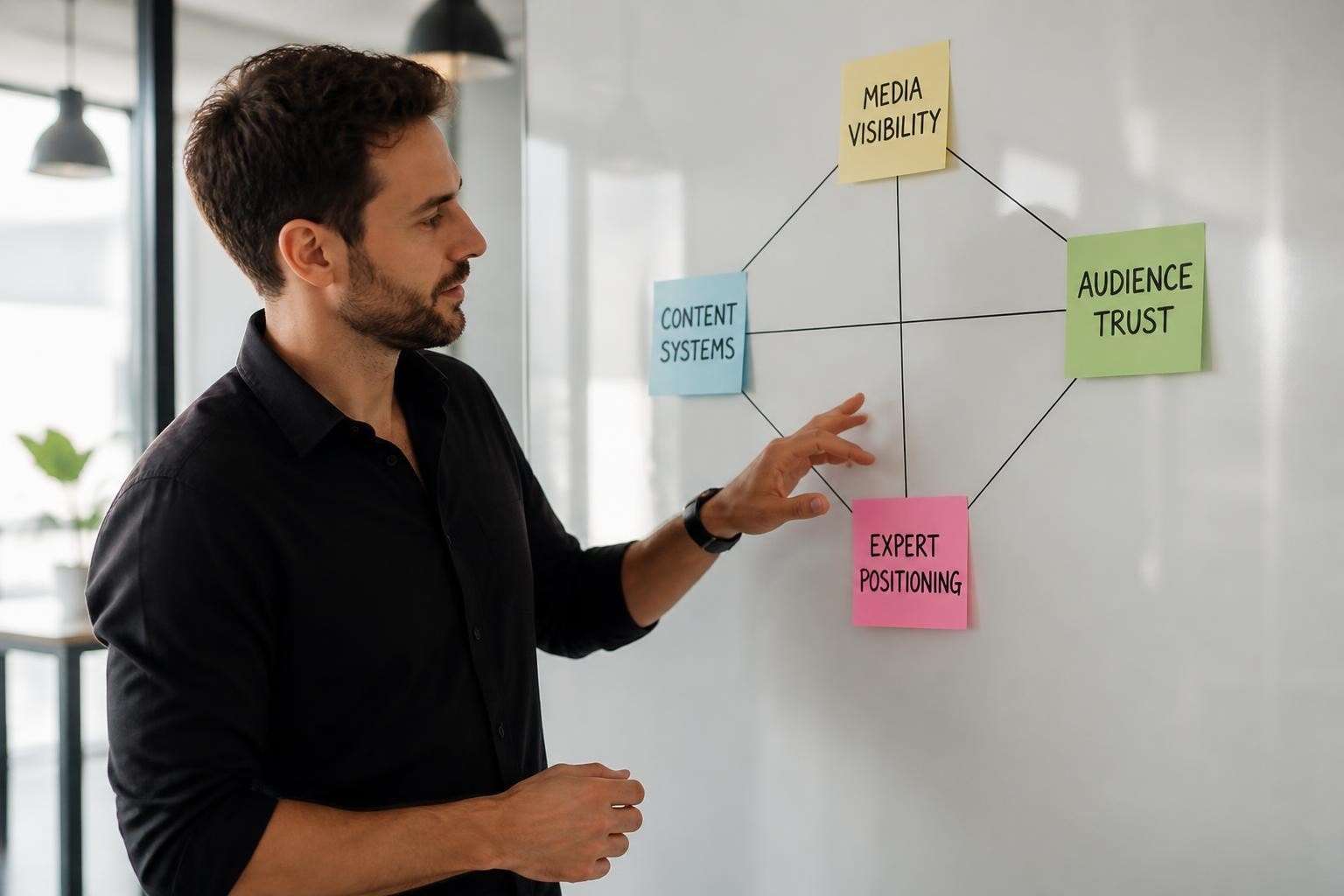
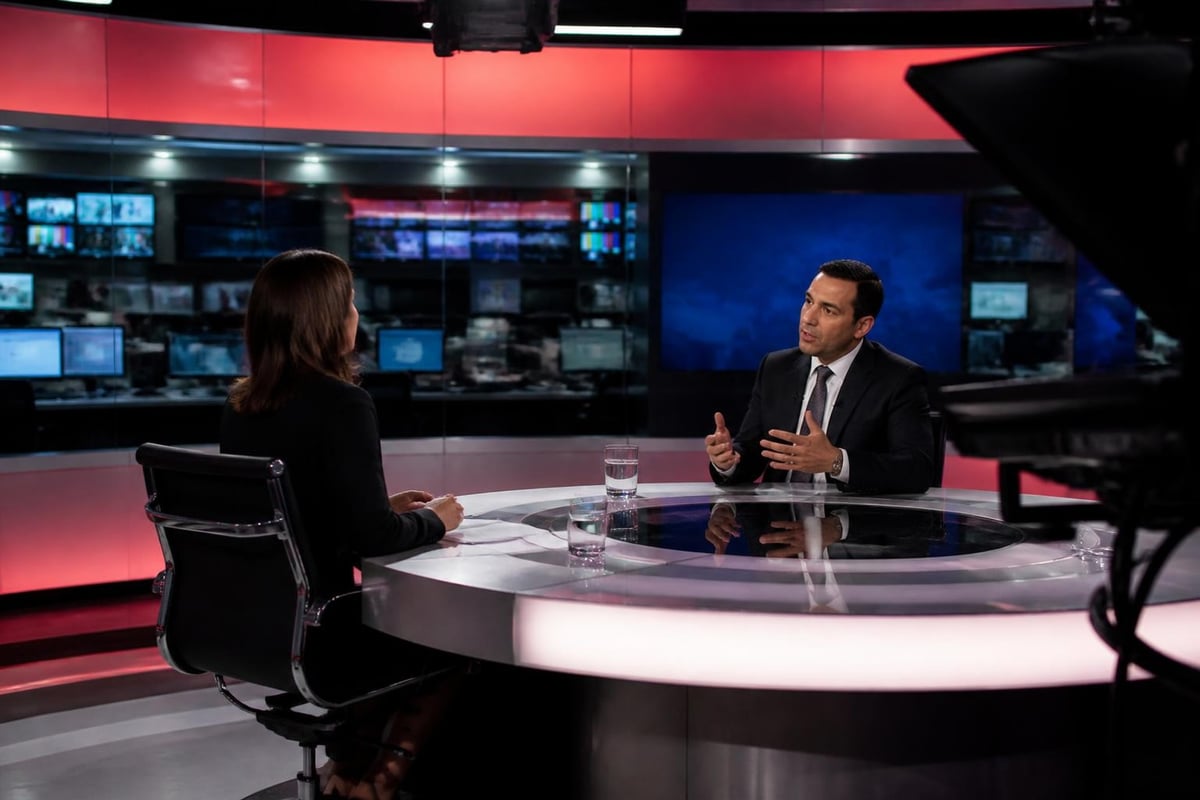
Television remains the ultimate credibility amplifier for premium service providers, consultants, and thought leaders selling complex, high-consideration offerings. While digital channels excel at reach and frequency, tv-driven high-ticket sales leverage something fundamentally different: the transfer of institutional trust from broadcast media to individual experts. When a CEO appears on NBC, ABC, or CBS, they inherit decades of network credibility that digital platforms simply cannot replicate. This authority transfer becomes the catalyst for shortening sales cycles, commanding premium pricing, and attracting clients who make six-figure and seven-figure purchasing decisions based on perceived expertise rather than price comparison.
The Psychology Behind TV Authority and Premium Purchasing Decisions
High-ticket buyers operate in a completely different decision-making framework than typical consumers. They're not comparing features on a spreadsheet or hunting for discounts. Instead, they're evaluating risk, searching for proof of expertise, and seeking partners who demonstrate mastery at the highest levels.
Why Television Credibility Accelerates Trust Formation
Television appearances function as third-party validation that bypasses the skepticism most prospects maintain toward self-promotional content. When Mitch Carson positions clients on network television, the psychological impact stems from several reinforcing factors:
- Institutional endorsement: Networks maintain rigorous editorial standards, creating an implicit vetting process
- Scarcity perception: Limited airtime suggests selectivity and newsworthiness
- Social proof at scale: Millions of viewers create bandwagon effects even among non-viewers who learn about appearances
- Permanence: Archived segments become evergreen credibility assets that compound over time
The consideration phase research from Kantar demonstrates that high-value purchases involve extended evaluation periods where media exposure during this window significantly influences final selection. Television doesn't just create awareness; it shapes the consideration set by elevating perceived expertise.
The Measurement Challenge in TV-Driven High-Ticket Sales
Traditional direct-response metrics fail spectacularly when applied to premium service sales influenced by television. A CEO watching a segment in January may not reach out until April, and the actual engagement might come through a referral partner who mentioned seeing the expert on TV.
According to Nielsen’s 2024 household data insights, viewing patterns have fragmented across linear broadcast, streaming platforms, and connected TV devices. This fragmentation creates attribution complexity but doesn't diminish television's impact on high-ticket conversions.
| Measurement Approach | Strengths | Limitations | Best For |
|---|---|---|---|
| Direct attribution (vanity URLs, promo codes) | Clear trackability | Undercounts halo effect, ignores delayed conversions | Immediate response offers |
| Marketing Mix Modeling | Captures incremental lift, accounts for lag | Requires significant data history | Ongoing campaigns with sufficient volume |
| Buyer surveys | Reveals actual influence path | Subject to recall bias | Understanding qualitative influence |
| CRM timestamp analysis | Identifies correlation patterns | Cannot prove causation | Detecting conversion surges post-air |
The Google Meridian framework offers open-source marketing mix modeling specifically designed to measure TV's incremental contribution while accounting for cross-channel effects and delayed conversions common in complex B2B sales.
Strategic Positioning for Maximum High-Ticket Impact
Not all television appearances drive premium sales equally. The difference between vanity exposure and revenue-generating authority lies in strategic positioning that aligns with high-ticket buyer priorities.
Crafting Producer-Ready Expertise That Commands Premium Pricing
Producers seek guests who deliver actionable insights, newsworthy perspectives, and viewer value. The media strategies that Mitch Carson teaches focus on translating subject matter expertise into television-ready formats that simultaneously serve audience needs and position the expert as the obvious choice for premium engagements.
Essential positioning elements include:
- Contrarian frameworks: Challenge industry conventions with evidence-based alternatives
- Proprietary methodologies: Name and systematize your unique approach
- Outcome specificity: Quantify results in terms meaningful to your high-ticket buyers
- Category ownership: Define a specialized niche where you're the recognized authority
When appearing on television, the goal isn't broad appeal. It's magnetic resonance with the specific decision-makers who have both the problem you solve and the budget to solve it at premium levels.
The Content Architecture of Authority-Building Television Segments
Effective tv-driven high-ticket sales require content that demonstrates expertise while creating natural next-step engagement paths. A well-structured segment includes:
- Hook statement: Quantified problem or surprising insight that captures attention
- Framework introduction: Your proprietary system or methodology name
- Implementation principle: One actionable concept viewers can use immediately
- Depth signal: Reference to complexity that indicates there's much more to learn
- Soft call-to-action: Natural mention of where interested parties can continue the conversation
The framework itself becomes marketing IP. When prospects reference "your three-phase methodology" or "that framework you discussed on NBC," you've created shared vocabulary that positions you as the category authority.

Converting Television Authority Into High-Ticket Revenue
Television appearances generate credibility, but credibility alone doesn't close premium deals. Strategic conversion architecture transforms media visibility into qualified pipeline and eventual revenue.
The Multi-Touch Attribution Reality
According to research from The Trade Desk’s 2024 Connected TV Report, programmatic CTV adoption has created new opportunities for targeting and measurement, but high-ticket B2B sales still require understanding that television functions as one touchpoint in an extended journey.
A typical high-ticket conversion path influenced by television might include:
- Prospect sees expert on morning news segment discussing industry challenge
- Weeks later, prospect encounters the expert's LinkedIn content
- Colleague mentions having heard of the expert (social proof amplification)
- Prospect attends a speaking engagement or webinar
- Direct outreach occurs months after initial television exposure
- Sales conversation references TV appearance as credibility foundation
The speaking strategies developed by authority experts create additional touchpoints that compound television exposure, building the repetition and variety of proof points necessary for premium purchasing confidence.
Architecting the Post-Broadcast Conversion Funnel
Television drives top-of-funnel credibility and mid-funnel consideration. Converting that authority into closed deals requires intentional funnel architecture:
Immediate capture mechanisms:
- Segment-specific landing pages with value-added resources
- LinkedIn outreach campaigns timed to broadcast windows
- Email sequences to existing database highlighting media placement
- Strategic content amplification across owned channels
Medium-term nurture sequences:
- Case studies demonstrating outcomes for clients similar to target prospects
- Thought leadership content that extends concepts introduced on television
- Strategic alliance notifications to referral partners
- Event invitations positioned as exclusive access to the expert
High-touch conversion processes:
- Qualification frameworks that identify genuine high-ticket fit
- Diagnostic conversations that demonstrate methodology depth
- Proposal positioning that reinforces television-established authority
- Pricing presentations that leverage credibility to justify premium investment
The conversion rate from television exposure to closed high-ticket deal may be fractional, but when average deal sizes reach six or seven figures, even small percentages generate substantial ROI. As AdExchanger’s coverage of outcome-based measurement indicates, the industry is moving toward more sophisticated attribution that captures these longer-term conversion paths.
Building Systematic Television Authority in 2026
Sporadic television appearances create brief credibility spikes. Systematic authority development through consistent media presence builds compounding recognition that fundamentally repositions how the market perceives an expert's value.
The Guaranteed Placement Approach vs. Pitch-and-Hope Publicity
Traditional publicity models involve pitching story ideas to producers with uncertain outcomes and unpredictable timing. For executives and experts building intentional authority strategies, this approach creates planning challenges and inconsistent results.
Guaranteed placement systems solve this problem by securing confirmed television interviews through established producer relationships and strategic positioning frameworks. This predictability enables experts to build television authority into their annual business development strategy rather than treating it as an opportunistic tactic.
| Approach | Timeline | Predictability | Strategic Value | Investment Level |
|---|---|---|---|---|
| Traditional PR pitch | 3-12 months | Low (pitch-dependent) | Opportunistic | Variable retainers |
| Guaranteed placement | 30-90 days | High (confirmed bookings) | Strategic, plannable | Fixed project/program |
| Self-service pitching | Ongoing | Very low | Inconsistent | Time investment |
| Network hosting | Ongoing | Guaranteed (contracted) | Maximum authority | Premium investment |
The BookedForTV™ system exemplifies the guaranteed placement model, where positioning strategy combines with producer relationships to create predictable authority-building outcomes aligned with business development cycles.
Frequency, Consistency, and the Compounding Authority Effect
Single television appearances generate credibility. Multiple appearances across time create category authority. The compounding effect occurs through several mechanisms:
- Recognition threshold: Repeated exposure moves prospects from "I think I've heard of them" to "I know exactly who they are"
- Content depth: Multiple segments allow coverage of different facets of expertise
- Network diversification: Appearances across NBC, ABC, CBS, and cable creates omnipresence perception
- Archive leverage: Accumulated media creates overwhelming social proof in sales conversations
According to IAB’s 2024 Digital Video Ad Spend report, advertisers are increasingly investing in video across both traditional TV and connected TV platforms, recognizing that video content drives consideration in ways static formats cannot match.
Integrating Television Authority with Comprehensive Visibility Strategies
While television provides unmatched credibility transfer, maximum high-ticket sales impact comes from integrating TV appearances with complementary authority-building channels:
Podcast development: Hosting a strategic podcast creates owned media that complements earned television placement, allowing for longer-form expertise demonstration and ongoing relationship building with the exact audience television reaches.
Book publishing: Published author status reinforces television credibility while providing tangible proof of expertise. Books serve as both positioning tools and premium business cards in high-ticket sales conversations.
Speaking engagements: Live presentations to target audiences create high-touch conversion opportunities while generating additional content for media pitching and social amplification.
Strategic content: Publicity-focused content strategies that amplify television appearances across digital channels ensure that broadcast exposure generates maximum sustained visibility.
Advanced Measurement and Optimization for TV-Driven High-Ticket Sales
As television measurement evolves, sophisticated marketers are adopting frameworks that capture both immediate response and long-term authority impact on premium sales.
Implementing Multi-Touch Attribution for Complex Sales Cycles
High-ticket B2B sales rarely convert through single touchpoints. Attribution models must account for television's role in a multi-month, multi-channel journey. The Google Research on CTV reach measurement provides technical approaches for understanding television's reach contribution even when direct tracking proves difficult.
Practical attribution approaches:
- First-touch weighted: Credit television appearances that initiated prospect awareness
- Influence scoring: Survey closed deals to understand which touchpoints were most influential
- Time-decay modeling: Apply greater weight to touchpoints closer to conversion while still crediting earlier television exposure
- Custom multi-touch: Develop proprietary attribution logic based on your specific sales cycle patterns
CRM integration becomes critical for tracking when prospects who eventually convert were first exposed to television content, even if they don't immediately engage.
Optimizing Segment Content Based on Conversion Data
Not all television segments drive equal high-ticket sales impact. Analyzing which topics, positioning approaches, and call-to-action formats generate qualified pipeline allows for strategic optimization.
Track these segment-level variables:
- Topic category and specific angle
- Proprietary framework mentioned
- Depth of technical discussion
- Call-to-action type and specificity
- Network and program placement
- Audience demographics
Over time, patterns emerge showing which combinations drive the highest-quality prospect engagement. This data informs future segment pitching and positioning to maximize revenue impact rather than just visibility.
Calculating True ROI for Authority-Building Television Investment
Premium television authority strategies require investment in positioning, production, placement, and amplification. Calculating accurate ROI means accounting for both direct conversions and halo effects.
Complete ROI framework:
- Direct attributed revenue: Deals where television was explicitly mentioned as influential factor
- Assisted conversions: Opportunities where TV appeared in touchpoint sequence
- Pipeline velocity increase: Shortened sales cycles due to pre-established credibility
- Price premium capture: Higher pricing accepted due to authority positioning
- Referral quality improvement: Better-fit referrals from elevated market positioning
- Team recruiting advantage: Easier talent acquisition due to employer brand enhancement
The Springer Journal article on data-driven budget allocation offers methodological frameworks applicable to allocating marketing investment between authority-building channels like television and direct performance channels.
Future-Proofing Your Television Authority Strategy
The television landscape continues evolving with streaming fragmentation, programmatic buying capabilities, and measurement innovation. Future-proof strategies maintain flexibility while preserving core authority-building principles.
According to FreeWheel’s 2024 buy-side trends report, buyers increasingly use both linear TV and addressable streaming to achieve reach objectives while pursuing measurable outcomes. For high-ticket sales, this means opportunities to appear on traditional networks while also leveraging targeted streaming placements.
Emerging opportunities in 2026:
- Addressable TV for hyper-targeted audience reach in premium verticals
- Interactive CTV formats that enable immediate engagement from high-value prospects
- Cross-platform measurement linking television exposure to website behavior and CRM data
- Programmatic guaranteed placements combining automation with premium inventory access
The fundamental principle remains constant: television authority accelerates high-ticket sales by transferring institutional credibility to individual experts, shortening trust-building cycles that otherwise require years of relationship development.
Television authority transforms how premium buyers perceive expertise, directly influencing their willingness to invest in high-ticket services and partnerships. By implementing systematic placement strategies, measuring long-term attribution, and integrating TV appearances with comprehensive authority-building programs, executives and experts can predictably generate the credibility that commands premium pricing. Mitch Carson specializes in positioning CEOs, founders, and authors for guaranteed television placement that builds market-leading authority and attracts premium clients through strategic media visibility and producer-ready expertise frameworks.