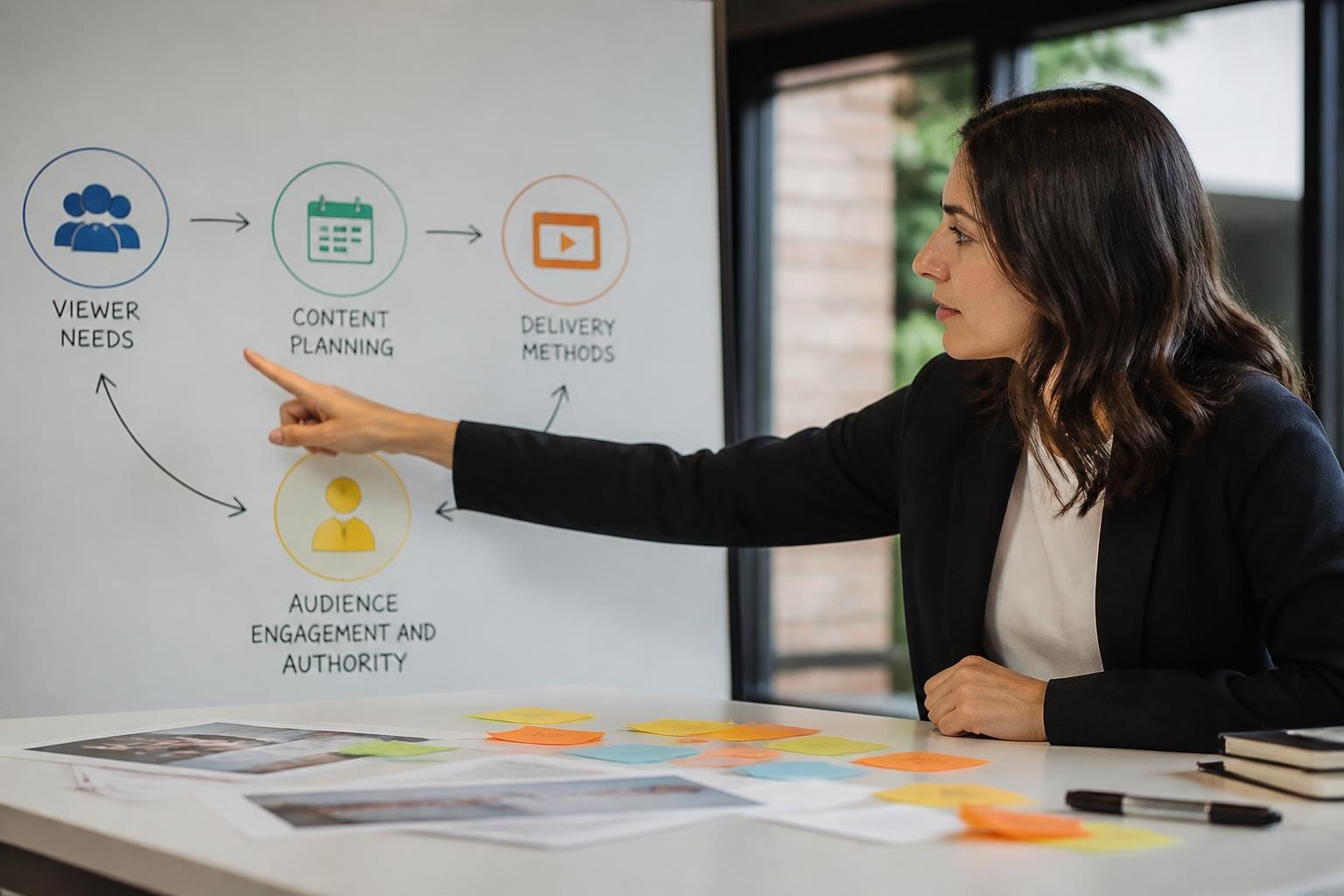
Television interviews represent one of the most powerful opportunities for CEOs, authors, and business leaders to establish authority and reach millions of potential clients. Yet a single misstep during a live broadcast can undermine years of credibility-building work. Understanding the most common tv interview mistakes to avoid separates executives who leverage media appearances for exponential growth from those who squander valuable airtime. As an NBC Las Vegas host who has guided hundreds of experts through the television interview process, I've witnessed firsthand how preparation, strategic messaging, and on-camera presence determine whether an appearance builds authority or damages reputation.
The Preparation Phase Errors That Sabotage Success
Most tv interview mistakes to avoid begin long before the camera starts rolling. Executives often treat television appearances as casual conversations rather than strategic communications opportunities requiring detailed preparation. This fundamental misunderstanding creates cascading problems that undermine the entire interview.
Failing to research the show format and audience ranks among the most damaging preparation errors. Different programs serve distinct demographics with varying content expectations. A morning news segment requires different messaging than an industry-focused podcast or evening talk show. Harvard’s media interview workbook emphasizes tailoring your content to specific audience segments to maximize relevance and engagement.
Critical Pre-Interview Research Steps
- Analyze at least three recent episodes to understand tone, pacing, and typical question styles
- Identify the show's target demographic and their primary concerns
- Review the host's interview style and typical conversation flow
- Understand the segment length and format constraints
- Clarify whether the interview is live or pre-recorded
Another preparation mistake involves neglecting to develop three core messages before the interview. Without predetermined key points, even seasoned executives ramble, lose focus, or fail to deliver memorable takeaways. Your messaging should address what the audience needs to know, what differentiates your perspective, and what action you want viewers to take.
The American Psychological Association’s media guide recommends creating message maps that connect your expertise to audience benefits. Each core message should be condensable into a single sentence yet expandable with supporting evidence, stories, or statistics depending on the conversation's direction.

Message Delivery Mistakes That Dilute Your Authority
Once the interview begins, how you communicate matters as much as what you say. Television amplifies both strengths and weaknesses, making delivery mistakes particularly costly for authority positioning.
Using industry jargon and technical language consistently ranks among the top tv interview mistakes to avoid. What sounds sophisticated in boardrooms often confuses general audiences. When viewers struggle to understand your points, they disengage mentally and dismiss your expertise. Executives who explain complex concepts in accessible terms demonstrate deeper mastery than those hiding behind terminology.
Common Language Pitfalls
| Mistake | Impact | Solution |
|---|---|---|
| Technical acronyms | Loses 70% of audience | Define or replace with plain language |
| Industry buzzwords | Sounds rehearsed, inauthentic | Use conversational alternatives |
| Academic terminology | Creates distance from viewers | Choose everyday vocabulary |
| Lengthy explanations | Viewer attention drops | Use concise, benefit-focused statements |
Failing to bridge back to your core messages represents another critical delivery error. Hosts often ask unexpected questions or pursue tangents that pull you away from strategic talking points. Without bridging techniques, you surrender control of the narrative. Harvard Business Review’s guidance on nailing media interviews emphasizes the importance of transitional phrases that acknowledge questions while steering back to your prepared messages.
Effective bridges include phrases like "That's an important consideration, and what's particularly relevant is…" or "The bigger picture here involves…" These transitions allow you to address the question respectfully while refocusing on your strategic messaging.
The mistake of answering questions you weren't asked often stems from over-preparation. Executives rehearse responses to anticipated questions, then deliver those canned answers regardless of what the host actually asks. This disconnect creates awkward moments and makes you appear robotic or evasive. For those developing their on-camera skills, understanding public speaking for leaders provides foundational techniques applicable to television interviews.
Body Language and On-Camera Presence Errors
Television is fundamentally a visual medium. Your nonverbal communication carries more weight than many executives realize, and subtle body language mistakes can contradict even the strongest verbal messages.
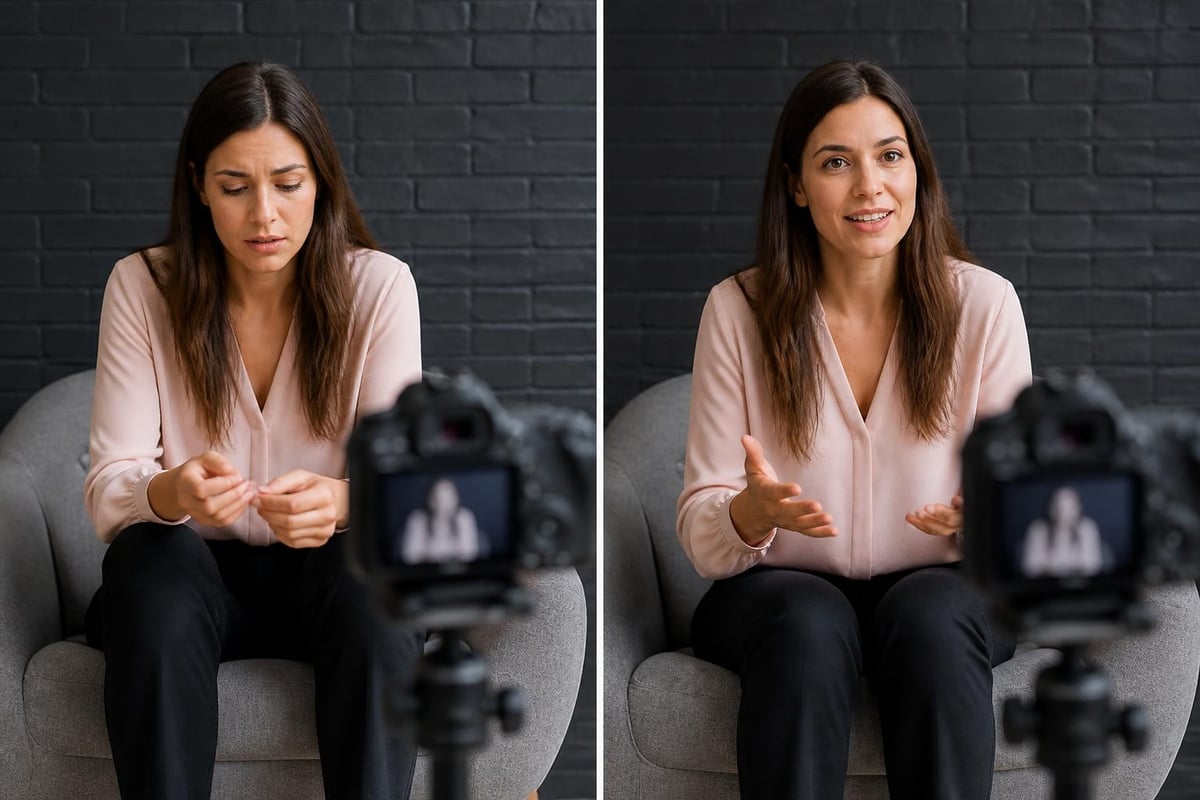
Poor posture and positioning immediately signals uncertainty or discomfort. Slouching, leaning away from the camera, or appearing physically closed off (crossed arms, hunched shoulders) undermines your authority before you speak. Conversely, executives who sit upright with open body language and maintain appropriate eye contact project confidence and expertise.
Essential On-Camera Body Language Elements
- Maintain steady eye contact with the host during in-studio interviews or directly at the camera lens for remote segments
- Control fidgeting behaviors such as pen clicking, hair touching, or excessive hand gestures that distract from your message
- Use purposeful gestures that emphasize key points without appearing overly animated or mechanical
- Smile genuinely at appropriate moments to create connection and warmth
- Position yourself at a slight angle rather than square to the camera for more flattering visuals
Ignoring wardrobe considerations ranks among the frequently overlooked tv interview mistakes to avoid. Certain patterns, colors, and accessories create technical problems on camera. Small checks, tight stripes, and intricate patterns cause visual interference called moiré. Overly bright whites or pure blacks can challenge camera exposure. Noisy jewelry or accessories create audio distractions.
Writer’s Digest’s on-camera interview guide recommends solid colors in medium tones, minimal jewelry, and clothing that fits well without requiring constant adjustment. Your appearance should enhance your credibility without drawing attention away from your message.
The mistake of failing to manage nervous energy affects even experienced speakers. Television amplifies small movements and vocal variations. Rapid blinking, throat clearing, or vocal fry can distract viewers and undermine your authority. Understanding how to speak with confidence provides techniques for managing anxiety and projecting calm assurance.
Response Strategy Mistakes That Damage Credibility
How you handle difficult questions, unexpected topics, or challenging moments defines your interview success as much as your prepared messaging. Strategic response mistakes can transform promising interviews into credibility disasters.
Becoming defensive or argumentative when challenged represents a critical error. Television audiences judge not just your positions but how you handle disagreement. Executives who react emotionally, interrupt hosts, or dismiss alternative viewpoints appear insecure regardless of their expertise. The Poynter Institute’s guidance emphasizes maintaining professional composure even during confrontational interviews.
Effective strategies for handling tough questions include acknowledging legitimate concerns, reframing the question to address underlying issues, and using evidence rather than emotion in your responses. The goal is demonstrating thoughtfulness and expertise, not winning arguments.
Framework for Handling Difficult Questions
- Pause before responding to gather thoughts and avoid reactive answers
- Acknowledge the question's validity before presenting your perspective
- Use the "feel, felt, found" technique: "I understand why people feel that way. Others have felt similarly. What we've found is…"
- Redirect to positive framing without avoiding the core issue
- Provide specific evidence rather than general assertions
Over-sharing or providing too much detail dilutes your impact and consumes valuable airtime. Television segments operate under strict time constraints. Executives who launch into lengthy backstories, unnecessary context, or tangential details frustrate producers and lose viewer attention. Your responses should be complete yet concise, delivering maximum value in minimum time.
The Public Relations Society of America’s media guide recommends the "headline first" approach: state your main point immediately, then add supporting details only if time permits. This structure ensures your key message gets delivered even if the segment runs short.
Failing to prepare for the "gotcha" question leaves you vulnerable to appearing unprepared. Skilled hosts often save challenging questions for late in the interview when you're relaxed. Anticipate potential controversies, competitive comparisons, or uncomfortable topics related to your industry. Prepare honest, strategic responses that acknowledge concerns while reinforcing your core positioning.
Technical and Logistical Mistakes
Beyond messaging and performance, technical and logistical errors can derail even the best-prepared interviews. These operational tv interview mistakes to avoid often receive less attention but carry significant consequences.
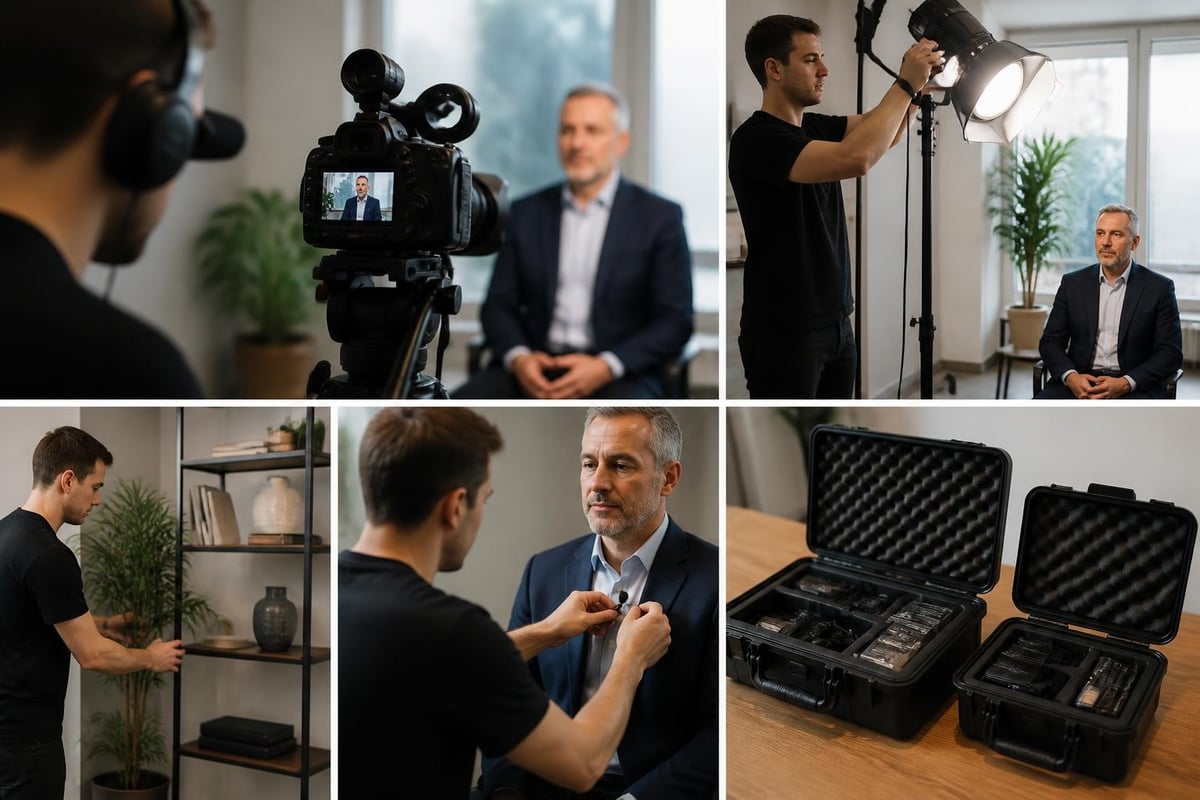
Arriving late or rushing into the interview creates unnecessary stress and prevents proper setup. Studios and remote interview locations require technical checks, microphone placement, lighting adjustments, and sound testing. Executives who arrive with minimal margin leave no buffer for unexpected issues and begin interviews already flustered.
Best practice involves arriving 30-45 minutes early for in-studio interviews and testing all equipment 15-20 minutes before remote interviews. This buffer time allows you to settle, review notes, and address any technical problems before going live. The insights shared on speaking and presentation delivery emphasize the importance of controlling your environment and mental state before high-stakes communications.
| Technical Element | Common Mistake | Best Practice |
|---|---|---|
| Audio quality | Poor microphone positioning | Test and adjust levels before recording |
| Lighting | Harsh shadows or backlighting | Verify camera angle and light sources |
| Background | Cluttered or unprofessional setting | Choose neutral, distraction-free backgrounds |
| Internet connection | Unstable bandwidth for remote interviews | Test connection speed, use ethernet when possible |
| Backup plans | No contingency for technical failure | Have phone number and alternative platform ready |
Neglecting to clarify interview format and expectations leads to preventable confusion. Is this a solo interview or panel discussion? Will there be audience questions? Is the interview live or can portions be edited? Understanding these parameters shapes your preparation and performance strategy. MediaFriendly’s interview management guide provides comprehensive checklists for confirming logistical details before interviews.
The mistake of ignoring follow-up opportunities wastes the interview's full potential. Many executives treat the interview as a standalone event rather than part of an ongoing authority-building strategy. Request recording links or broadcast dates, share the interview across your platforms, incorporate clips into your marketing, and maintain relationships with producers for future opportunities.
Post-Interview Mistakes That Limit Impact
The interview doesn't truly end when the camera stops recording. How you handle the post-interview phase determines whether you maximize the appearance's authority-building value or squander its potential reach.
Failing to leverage the content strategically represents a significant missed opportunity. Television interviews provide credible third-party validation of your expertise. This content should fuel your authority platform for months. Executives who don't repurpose interviews into social media clips, website testimonials, email campaigns, and sales materials leave substantial value unrealized.
Strategic Post-Interview Actions
- Obtain recording rights and broadcast schedule details
- Create multiple content formats from the interview (clips, quotes, articles, social posts)
- Thank the host and production team with personalized follow-up
- Monitor viewer engagement and feedback across platforms
- Track measurable impact on website traffic, inquiries, or sales
- Maintain ongoing relationships with producers for future bookings
Not analyzing your performance for improvement prevents growth. Even successful interviews contain lessons for enhancement. Review recordings objectively or with trusted advisors. Identify filler words, nervous habits, unclear responses, or missed opportunities. This analysis creates a continuous improvement loop that elevates each subsequent appearance. Professionals focused on building speaking confidence understand that objective self-assessment accelerates skill development.
The mistake of treating the interview as a one-time transaction rather than relationship-building opportunity limits future possibilities. Producers who have positive experiences with prepared, professional guests remember them for future segments. Maintaining periodic contact, sharing relevant story ideas, and demonstrating ongoing expertise keeps you on their radar for subsequent bookings.
Advanced Mistakes That Undermine Strategic Positioning
Beyond tactical errors, certain strategic tv interview mistakes to avoid can fundamentally undermine your authority positioning and long-term credibility.
Accepting interview opportunities without strategic alignment dilutes your brand. Not every television appearance serves your positioning goals. Executives should evaluate whether the show's audience, format, and message align with their authority-building strategy. Appearing on programs that conflict with your positioning or attract the wrong audience wastes time and potentially confuses your market.
Failing to establish your unique perspective makes you forgettable. Thousands of experts compete for limited television airtime. Those who sound like everyone else in their field fade into background noise. Your interview messaging must articulate what differentiates your approach, insights, or methodology. Columbia Journalism Review’s interview ethics reporting highlights how source preparation and clear positioning improve interview quality for both guests and audiences.
The mistake of underselling or overselling creates credibility problems. Underselling involves excessive humility that fails to establish expertise. Viewers watching a business segment expect confident, knowledgeable commentary, not hesitant or self-deprecating responses. Conversely, overselling through exaggerated claims, guaranteed outcomes, or dismissive attitudes toward alternatives triggers skepticism. The balance involves confident expertise supported by evidence, not arrogance or false modesty.
Neglecting to prepare compelling stories and examples leaves interviews dry and unmemorable. Abstract concepts and theoretical discussions lose television audiences quickly. Executives who illustrate points with specific client transformations, concrete case studies, or relatable analogies create emotional connection and memorability. Stories make your expertise tangible and your value proposition clear.
Industry-Specific Considerations
Different fields face unique tv interview mistakes to avoid based on their audience expectations and topic complexity.
Financial and technical experts often err by overwhelming viewers with data, charts, and complex analysis. Television demands simplified explanations that average viewers can grasp quickly. Breaking down sophisticated concepts into digestible insights without sacrificing accuracy represents a critical skill.
Authors and thought leaders frequently make the mistake of focusing too heavily on their book rather than the broader value they provide. While mentioning your publication is appropriate, interviews should deliver standalone value that demonstrates your expertise. Viewers who find the content valuable will seek out your book; those who perceive the interview as a sales pitch disengage.
CEOs and business leaders sometimes fail to translate industry-insider perspectives into audience-relevant insights. What fascinates you about operational efficiency or market dynamics may bore general viewers. Successful business interview segments connect your expertise to problems your audience faces, making abstract concepts personally relevant. The work showcased in client results demonstrates how proper positioning transforms industry expertise into compelling, accessible content.
Healthcare and scientific experts often struggle with the mistake of being too cautious or hedging their statements excessively. While scientific accuracy requires nuance, television audiences need clear, confident guidance. Finding the balance between precision and decisiveness challenges many technical experts but determines interview effectiveness.
Building Systematic Interview Excellence
Avoiding tv interview mistakes to avoid requires more than awareness. Systematic preparation, deliberate practice, and strategic positioning create consistent excellence across multiple appearances.
Developing a repeatable preparation protocol ensures consistency regardless of interview circumstances. This system should include research checklists, message development frameworks, technical verification procedures, and performance review processes. Executives with documented systems avoid preventable mistakes even under time pressure or stressful conditions.
Investing in media training and coaching accelerates improvement and prevents costly errors. Professional guidance identifies blind spots, provides objective feedback, and creates safe practice environments for refining techniques. The investment in expert coaching delivers returns through superior interview performance and expanded media opportunities. Those seeking to develop their authority platform can explore private consulting options for personalized guidance.
Creating a performance improvement feedback loop transforms each interview into a learning opportunity. Record all appearances, review them critically, note specific areas for enhancement, and implement improvements in subsequent interviews. This systematic approach compounds gains over time, elevating your on-camera presence and messaging effectiveness with each appearance.
The most successful television guests treat interviews as strategic communications opportunities requiring the same preparation and excellence they bring to major presentations, important negotiations, or critical business decisions. By systematically addressing the tv interview mistakes to avoid outlined throughout this analysis, executives transform media appearances from anxiety-inducing challenges into powerful authority-building assets.
Television interviews represent one of the fastest paths to establishing market-leading expertise, but only when executed with strategic precision and technical excellence. The difference between executives who leverage media for exponential growth and those who squander valuable airtime comes down to preparation, positioning, and performance. Every mistake avoided represents an opportunity to deliver memorable value that builds lasting authority.
Mastering television interviews transforms how potential clients, industry peers, and media producers perceive your expertise. By systematically avoiding the preparation, delivery, and strategic mistakes that undermine most appearances, you position yourself as the authoritative voice in your field. As the creator of the BookedForTV™ Guaranteed Placement System and host of Amazing Authorities on NBC Las Vegas, Mitch Carson specializes in helping CEOs, authors, and experts secure guaranteed TV placements while developing the producer-ready positioning and on-camera performance that turns interviews into authority-building assets. His systematic approach eliminates the guesswork from media appearances, ensuring every interview advances your credibility and attracts premium clients.