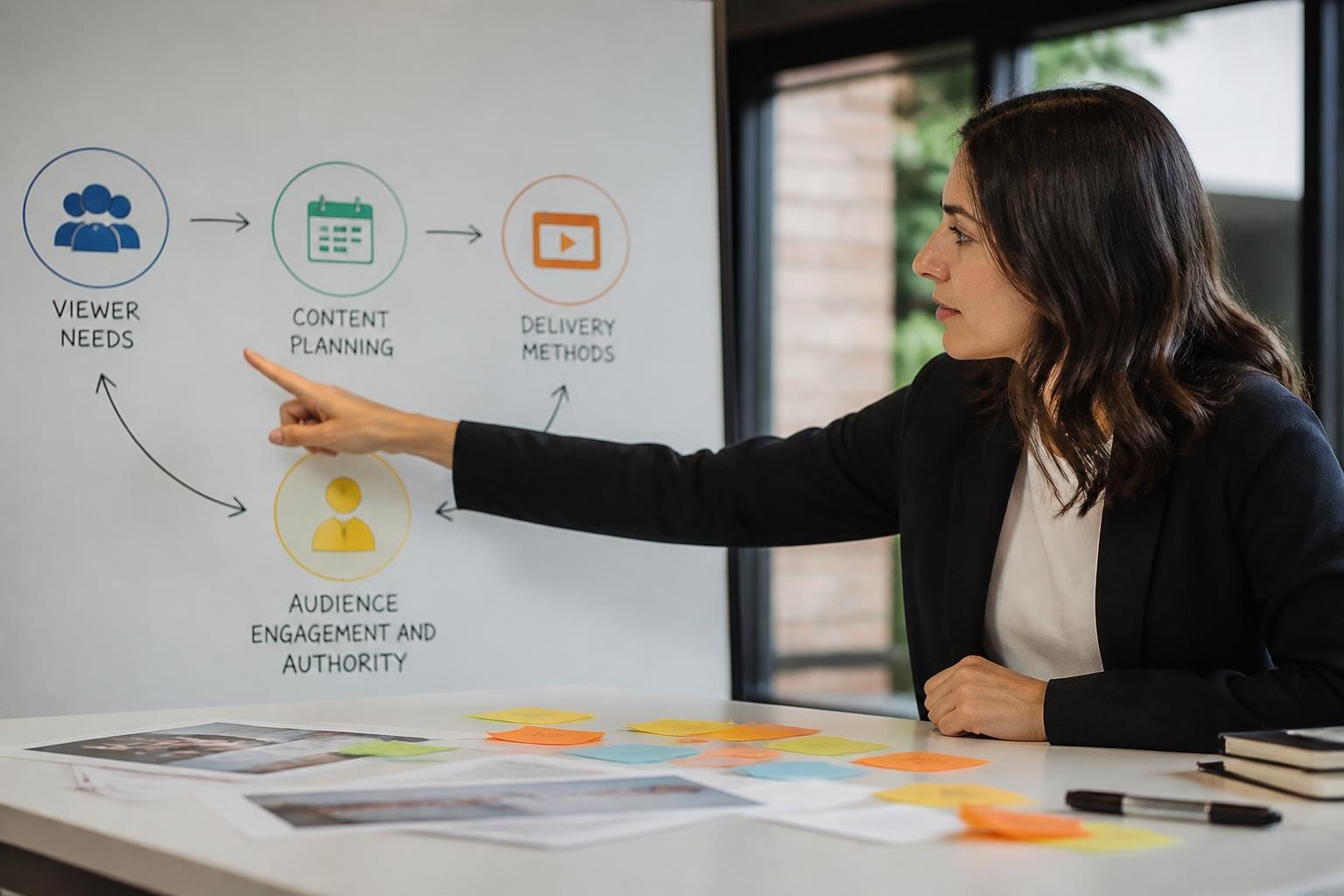
Television interviews remain one of the most powerful credibility amplifiers available to CEOs, authors, and thought leaders in 2026. Yet most experts approach TV opportunities without understanding the underlying framework that separates forgettable appearances from career-defining moments. The tv interview formula isn't about luck or personality-it's a systematic approach to positioning, performance, and post-broadcast leverage that transforms a single appearance into lasting market authority.
Understanding the Core Components of a Successful TV Interview
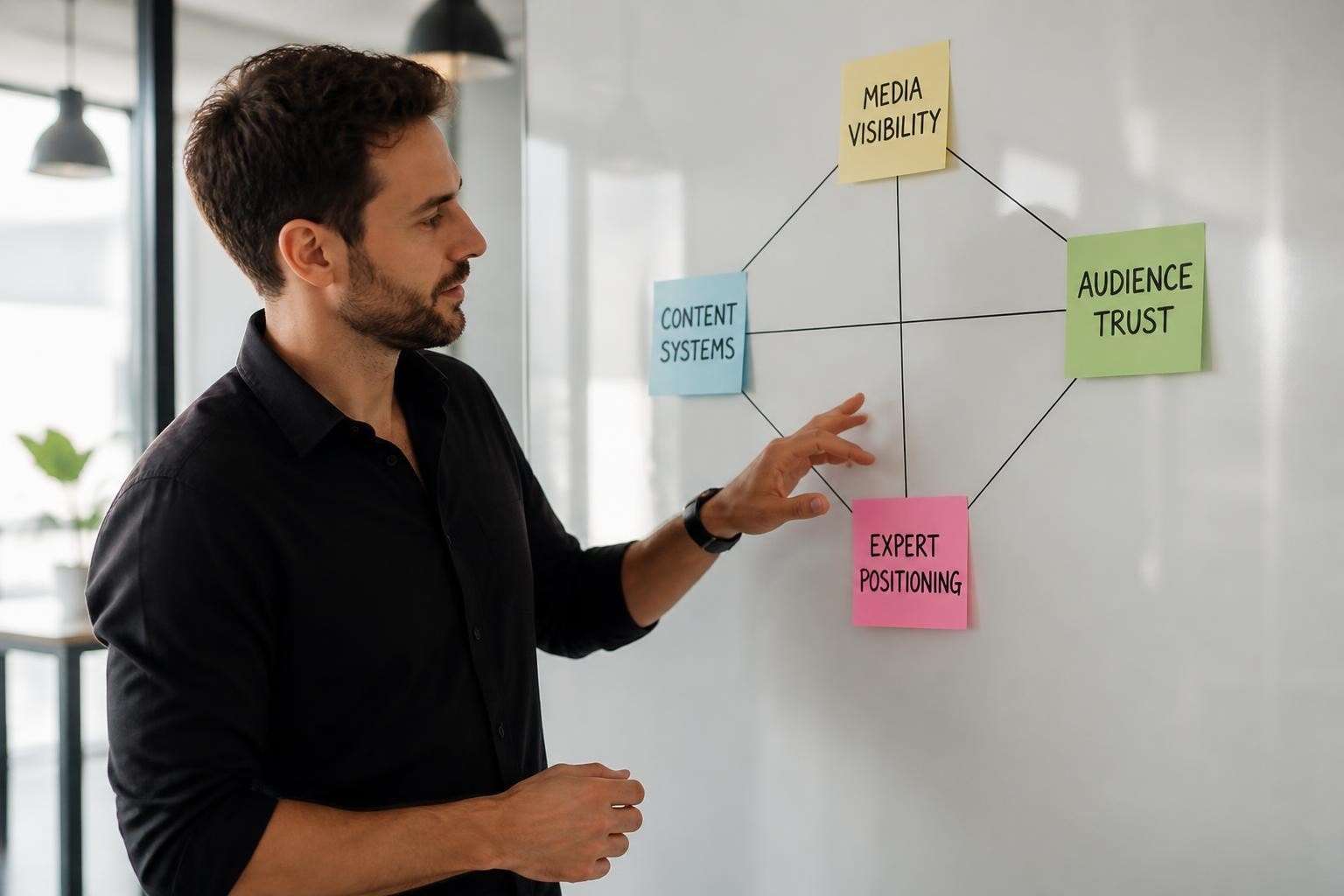
The tv interview formula operates on three foundational pillars that work in sequence. First comes producer-ready positioning, which determines whether you'll receive the booking in the first place. Second is on-camera performance architecture, the structured delivery that keeps viewers engaged and ensures your message lands with clarity. Third is post-broadcast amplification, the strategic leverage that extends a three-minute segment into months of credibility-building content.
Most experts focus exclusively on the middle component while ignoring the frameworks that come before and after. This creates a fundamental misalignment between what producers need and what spokespeople deliver. According to BBC Academy’s interviewing guidelines, successful broadcast interviews require extensive preparation on both sides of the camera, with clear structural planning long before the recording begins.
The Pre-Interview Positioning Framework
Before any camera operator arrives or studio lights turn on, the tv interview formula demands rigorous positioning work. This phase determines your angle, authority proof, and audience relevance-three elements producers evaluate in seconds when reviewing potential guests.
Your angle must answer one question: Why you, why now, why this show? Generic expertise doesn't earn bookings. Producers need a specific perspective that serves their audience's current interests while differentiating you from the dozens of other experts pitching similar topics.
Authority proof consists of tangible credentials that validate your right to speak on the subject:
- Published books or peer-reviewed research
- Quantifiable business results or client outcomes
- Previous media appearances or speaking engagements
- Proprietary methodologies or frameworks
- Industry recognition or awards
Audience relevance bridges your expertise to the show's specific demographic. A CEO discussing supply chain innovation pitches differently to a business news program versus a consumer-focused morning show. The tv interview formula requires customizing your positioning for each outlet's unique audience composition and content priorities.

Message Architecture: Building Your Core Narrative
Once positioning secures the booking, the tv interview formula shifts to message construction. Television operates under severe time constraints-most expert segments run between 90 seconds and four minutes. This compression demands message discipline that many spokespeople never develop.
The architecture begins with your headline message: one clear, memorable statement that encapsulates your core point. This isn't a summary; it's the single idea you want viewers to remember three days later. Everything else in your appearance supports or illustrates this central message.
The Three-Point Structure
| Component | Purpose | Time Allocation |
|---|---|---|
| Hook/Problem | Capture attention, establish relevance | 20-30 seconds |
| Framework/Solution | Deliver your methodology or insight | 60-90 seconds |
| Call/Takeaway | Actionable next step for viewers | 15-30 seconds |
This structure, fundamental to the tv interview formula, ensures your message has narrative momentum. The hook creates urgency, the framework delivers value, and the takeaway provides closure. Producers appreciate guests who understand this rhythm because it makes their editing process seamless.
Poynter’s interviewing resources emphasize that strong message architecture serves both the guest and the journalist, creating clear soundbites while maintaining editorial integrity. The best TV interviews feel conversational yet deliver precisely structured information.
Soundbite Engineering and Response Tactics
The tv interview formula requires mastering the soundbite-those 8-15 second clips that producers extract for promotional materials and social media. Soundbites aren't accidents; they're engineered responses designed for maximum impact and shareability.
Effective soundbites share common characteristics:
- Self-contained: Make sense without surrounding context
- Concrete: Use specific examples rather than abstractions
- Quotable: Memorable phrasing that viewers want to repeat
- Visual: Language that creates mental images
- Emotional: Connect to human experiences, not just data
When responding to host questions, the tv interview formula employs bridging techniques that acknowledge the question while redirecting to your core message. This isn't evasion-it's strategic focus. If a host asks about industry challenges, you might respond: "The challenge most CEOs face is X, which is exactly why our research revealed Y approach."
Handling Different Question Types
Producers and hosts deploy various question styles to elicit specific responses. Understanding these patterns allows you to prepare structured answers that satisfy the format while advancing your message.
Open questions ("Tell us about your approach…") invite narrative responses. Use these opportunities to deploy your three-point structure concisely. Closed questions ("Is this strategy effective?") require direct answers followed by supporting evidence. Hypothetical questions ("What if regulations change?") allow you to showcase expertise while steering toward actionable insights your audience can use immediately.
The American Psychological Association’s media training handbook provides evidence-based approaches to message framing across different interview contexts, emphasizing the importance of adapting delivery style while maintaining core message consistency.
On-Camera Performance Dynamics
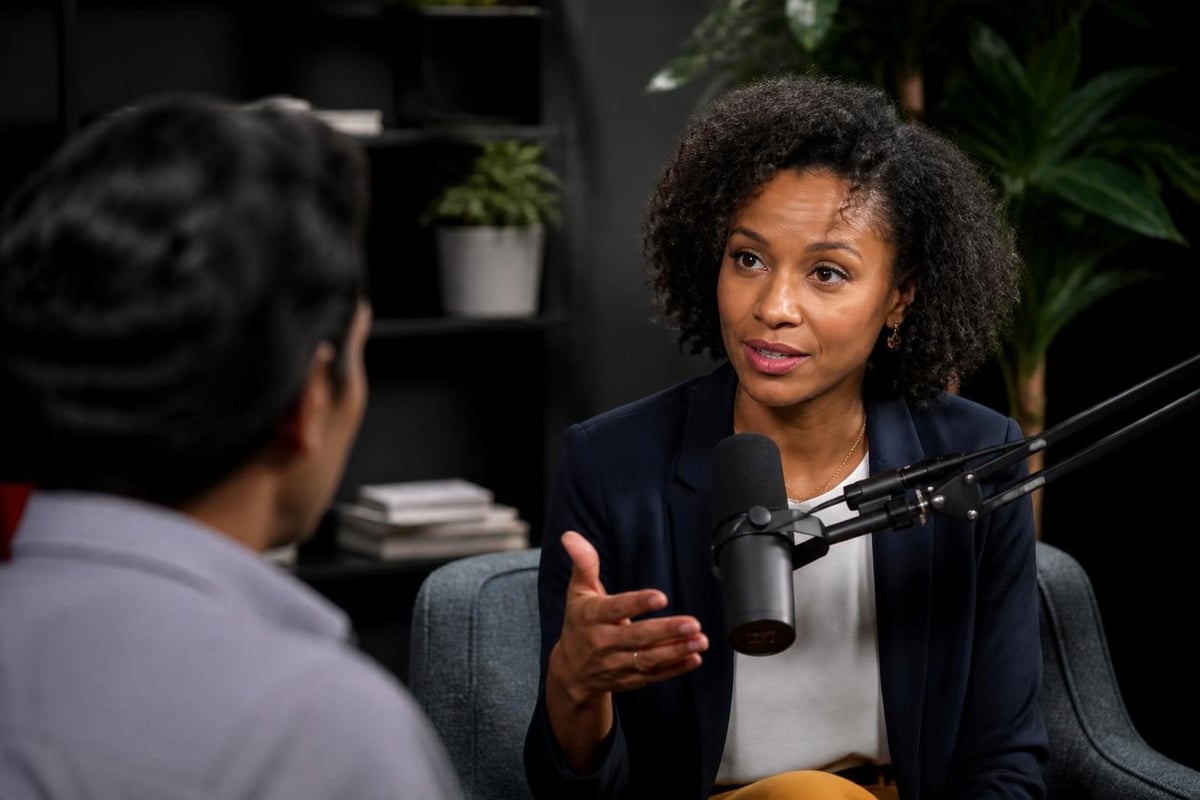
The tv interview formula extends beyond message content to include performance elements that significantly impact viewer perception. Vocal delivery, body language, and energy management work together to either amplify or undermine your expertise.
Vocal delivery on television demands more energy than natural conversation but less than stage speaking. The camera amplifies subtle expressions, so over-animation appears forced while flat delivery reads as disinterest. The target is controlled enthusiasm-genuine engagement with the topic expressed through varied pacing, strategic pauses, and natural vocal inflection.
Physical Presence and Technical Considerations
Body language communicates authority before you speak your first word. The tv interview formula emphasizes:
- Posture: Upright but relaxed, leaning slightly forward to show engagement
- Gestures: Purposeful hand movements that illustrate points without distraction
- Eye contact: Focused on the host (in interview format) or camera (in direct address)
- Facial expressions: Responsive to the conversation without exaggeration
University of Toronto’s TV interview tips offer practical guidance on wardrobe choices, handling B-roll situations, and managing off-camera moments that producers might include in final edits. These technical considerations matter as much as message content in creating a polished, professional appearance.
Energy management becomes critical in longer interviews or multi-segment appearances. The tv interview formula recommends maintaining peak energy for your opening statement and closing call to action, the two moments most likely to be featured in promotional clips or social shares.
The Producer Relationship Framework
Understanding producer psychology represents an often-overlooked component of the tv interview formula. Producers aren't just facilitators; they're editorial gatekeepers who determine not only who appears but how those appearances are framed and edited.
Building producer relationships requires recognizing their core needs:
- Reliability: Showing up prepared, on time, and delivery-ready
- Flexibility: Adapting to format changes or unexpected questions
- Audience value: Prioritizing viewer benefit over self-promotion
- Technical competence: Understanding broadcast requirements and constraints
Guests who make producers' jobs easier earn repeat bookings and better placement. This means arriving with backup examples, staying flexible on segment length, and understanding that your six-minute conversation might become a 90-second package.
Columbia Journalism Review’s examination of interview craft highlights how skilled interviewers shape narrative through question sequencing and follow-up techniques. Understanding this process helps guests anticipate flow and prepare responses that serve both editorial vision and personal messaging goals.
Post-Broadcast Amplification Strategy
The tv interview formula doesn't end when the camera stops recording. In fact, the post-broadcast phase often delivers more long-term value than the initial appearance itself. This phase transforms a single interview into sustained credibility and content assets.
Content Repurposing Architecture
| Asset Type | Application | Lifespan |
|---|---|---|
| Full interview recording | Website embed, YouTube channel | 12-24 months |
| Soundbite clips (15-30 sec) | Social media, email signatures | 6-12 months |
| Quote graphics | LinkedIn, Instagram, promotional materials | 3-6 months |
| Transcript excerpts | Blog posts, newsletters, authority content | Indefinite |
| "As Seen On" badges | Website, sales materials, media kit | Indefinite |
Strategic repurposing multiplies the return on interview investment. A single four-minute TV segment can generate 15-20 social media posts, three blog articles, email campaign content, and sales enablement materials that continue building authority for months.
The tv interview formula emphasizes securing usage rights during negotiation. Some networks restrict commercial use of footage, while others allow broad distribution with proper attribution. Clarifying these terms before the interview prevents missed amplification opportunities.
Live Versus Recorded Interview Dynamics
The tv interview formula adapts based on whether the interview airs live or undergoes post-production editing. Each format presents unique opportunities and constraints that prepared guests leverage strategically.
Live interviews offer no safety net but provide complete message control. What you say airs exactly as delivered, making preparation and soundbite engineering critical. Live formats also create urgency that can energize performance, though they require managing nervousness and maintaining composure through unexpected questions.
Recorded interviews allow producers to edit for time, clarity, and narrative flow. This means your strongest moments get highlighted, but also that context can shift in editing. The tv interview formula addresses this by front-loading key messages and ensuring every response can stand alone as a complete thought.
Harvard Business Review’s resources on communication under pressure explore how different communication styles adapt to various interview contexts, helping spokespeople develop flexibility while maintaining message discipline across formats.
Question Preparation and Anticipation Techniques
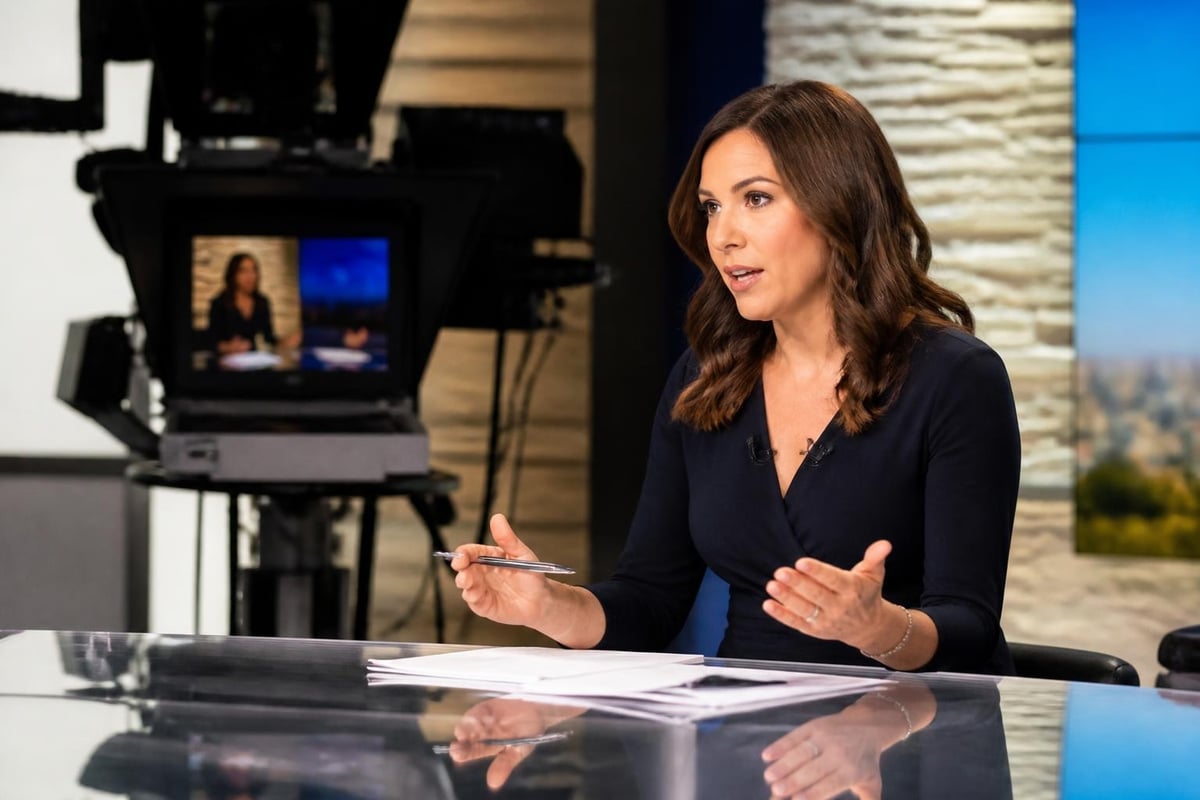
Advanced practitioners of the tv interview formula don't just prepare answers-they anticipate questions based on show format, current events, and host research patterns. This preparation creates the appearance of effortless expertise while actually representing hours of strategic thinking.
Begin by analyzing previous episodes to identify the host's questioning style:
- Do they prefer short, punchy exchanges or longer explorations?
- Do they challenge guests or facilitate platform building?
- What topics trigger follow-up questions versus simple acknowledgment?
- How do they transition between segments or themes?
Draft responses to likely questions, then practice delivering them conversationally rather than reading prepared statements. The goal is internalized preparation-knowing your material so thoroughly that responses feel spontaneous even when carefully structured.
Prepare for difficult questions with the same rigor as friendly ones. If there's industry controversy, competitive challenges, or potential criticism of your approach, develop responses that acknowledge legitimate concerns while redirecting to your core message. The tv interview formula treats challenging questions as opportunities to demonstrate depth and authenticity, not threats to avoid.
Building Long-Term Media Visibility
A single interview represents one data point in a larger authority-building strategy. The tv interview formula, when applied consistently across multiple appearances, creates cumulative credibility that transforms how markets perceive your expertise.
This cumulative effect requires strategic planning:
- Diversifying outlets: National, regional, and niche programs each serve different audience segments
- Topic evolution: Building on previous appearances to demonstrate thought leadership development
- Timing optimization: Aligning interviews with book launches, product releases, or industry events
- Cross-promotion: Leveraging each appearance to reference and amplify previous media coverage
The Radio Television Digital News Association provides technical and editorial standards that help both journalists and interview subjects understand broadcast best practices, ensuring appearances meet professional quality thresholds.
Accessibility and Technical Compliance
Modern applications of the tv interview formula must account for accessibility requirements that ensure content reaches all audience segments. Federal regulations on broadcast accessibility mandate captioning for most television programming, including interview segments.
For guests, this means speaking clearly, avoiding excessive jargon, and allowing brief pauses between thoughts to facilitate accurate captioning. These practices improve comprehension for all viewers while meeting legal standards.
Technical compliance extends to understanding broadcast standards for content, timing, and format. Producers appreciate guests who recognize these constraints and adapt accordingly, further strengthening professional relationships that lead to future opportunities.
Measuring Interview Impact and ROI
The tv interview formula includes measurement frameworks that quantify the business impact of media appearances. Without measurement, you cannot refine strategy or demonstrate return on investment in media training, travel, and preparation time.
Key metrics to track include:
- Direct response: Website traffic spikes, inquiry volume, sales attributed to interview mention
- Brand awareness: Social media mentions, branded search volume increases
- Credibility indicators: Media kit downloads, speaking invitation increases, partnership inquiries
- Content performance: Engagement rates on repurposed interview content
- Relationship development: Producer follow-up, invitation for return appearances
Nieman Journalism Lab’s coverage of evolving interview practices offers context on how audience expectations and measurement approaches continue shifting, helping both journalists and interview subjects adapt to changing media landscapes.
Advanced tracking connects specific interviews to pipeline velocity and deal closure rates, demonstrating how TV authority translates to business outcomes. This data justifies continued investment in media strategy while identifying which outlet types and message angles deliver optimal results.
Adapting to Format Evolution
The television landscape continues evolving, with traditional broadcast increasingly complemented by streaming platforms, podcast-video hybrids, and social-first content. The tv interview formula adapts to these format shifts while maintaining core principles of message discipline, audience value, and strategic positioning.
Streaming platforms often allow longer-form conversations, creating space for deeper exploration of topics. This format rewards guests who can maintain energy and deliver value across 20-30 minute segments rather than compressed three-minute packages. The structural principles remain-clear message architecture, soundbite engineering, strategic bridging-but the pacing adjusts to accommodate expanded runtime.
Social-first video interviews prioritize shareability and mobile optimization, influencing everything from visual composition to message construction. Responses need to work both in full-length context and as standalone 15-second clips designed for platform algorithms.
Mastering the tv interview formula transforms media appearances from random opportunities into systematic authority-building assets that compound over time. The framework-spanning positioning, performance, and amplification-gives CEOs and authors the structure needed to command attention and credibility on camera. If you're ready to leverage guaranteed TV placements to establish unignorable market authority, Mitch Carson specializes in helping experts secure strategic media visibility through the BookedForTV™ Guaranteed Placement System, combining producer-ready positioning with on-camera performance mastery that turns interviews into lasting business growth.