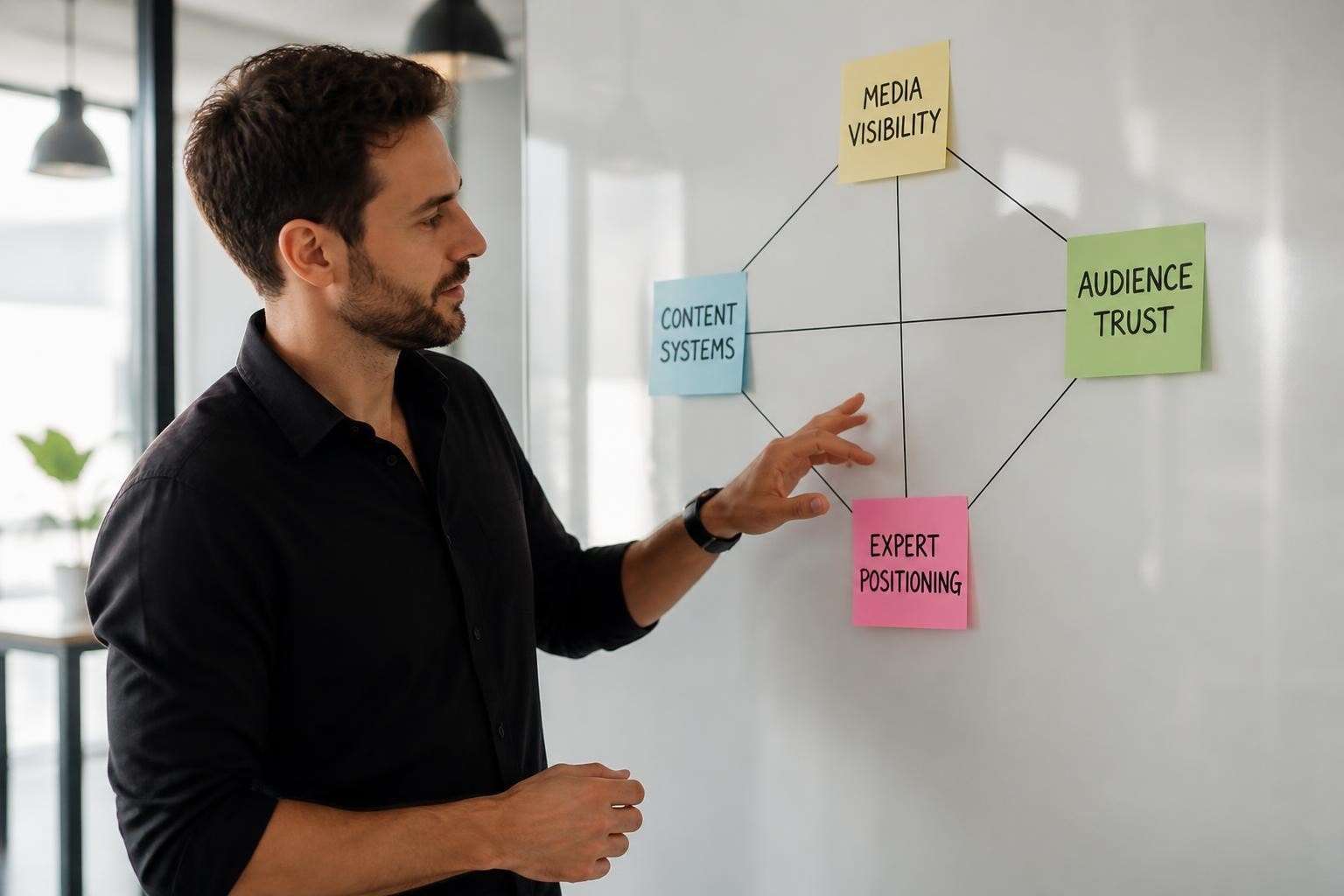
The difference between being knowledgeable and being recognized as an authority isn't just expertise. It's the strategic deployment of specific, durable assets that signal credibility to your market. These authority assets work 24/7 to establish your position, attract premium opportunities, and create separation from competitors who may possess similar knowledge but lack visible proof of expertise. Understanding which authority assets every expert needs and how to build them transforms your professional trajectory from invisible expert to market-recognized authority.
The Foundation of Expert Authority
Authority in 2026 requires more than credentials and competence. Markets reward visible expertise backed by tangible proof points that audiences can evaluate independently. Authority assets are non-replicable, durable elements that serve as reference points others cite, share, and trust.
The challenge most experts face isn't lack of knowledge. They possess deep subject matter expertise developed over years of practice. The problem is packaging that expertise into formats that decision-makers, media outlets, and potential clients can quickly assess and trust. Without these assets, even the most skilled professionals remain unknown outside their immediate network.
Three categories define the authority asset landscape:
- Visibility assets that put your expertise in front of target audiences
- Credibility assets that validate your expertise through third-party endorsement
- Intellectual property assets that codify your unique methodology
Each category reinforces the others. A proprietary framework gains traction when shared through media appearances. Media coverage becomes more accessible when you've published a book. Published work attracts speaking opportunities that expand your network.
Television Appearances as Credibility Multipliers
Television remains the ultimate credibility asset in 2026. Despite digital proliferation, TV appearances carry unique authority weight. When prospects see you on NBC, CBS, or ABC, their brain processes this exposure differently than social media content or blog posts.

The authority assets every expert needs start with strategic television visibility. A single TV interview creates multiple downstream assets. You gain video content for your website, screenshots for promotional materials, third-party validation for proposals, and conversation starters for networking.
Strategic TV Positioning Requirements
Securing television placements requires producer-ready positioning. Producers don't book experts; they book guests who deliver value to their audience. Your expertise must translate into viewer benefit within seconds.
Key positioning elements include:
- Timely topic angles that connect to current conversations
- Clear audience benefit statements
- Soundbite-ready insights that don't require extensive setup
- Visual credibility markers (titles, credentials, previous media)
Many experts approach TV bookings backward. They emphasize their credentials rather than the value they deliver to viewers. Producers evaluate dozens of pitches daily. The guests who secure placements understand media psychology and position accordingly. Mitch Carson’s BookedForTV™ Guaranteed Placement System addresses this exact challenge, helping experts develop the positioning and performance skills that guarantee placements.
Published Books as Authority Anchors
A published book functions as the cornerstone authority asset. Books signal commitment, depth of knowledge, and market validation in ways other content cannot replicate. When you author a book, you transition from expert to thought leader in prospect perception.
The publishing landscape in 2026 offers multiple pathways, but authority requires strategic approach. Traditional publishing carries prestige but demands established platform and extended timelines. Professional hybrid publishing delivers credibility with author control. Self-publishing provides speed but requires significant promotional infrastructure.
| Publishing Path | Timeline | Credibility Signal | Author Control | Marketing Support |
|---|---|---|---|---|
| Traditional | 18-24 months | Highest | Lowest | Moderate |
| Hybrid | 6-12 months | High | High | Moderate |
| Professional Self-Publishing | 3-6 months | Moderate-High | Highest | Author-Driven |
Your book becomes a business card that prospects actually read. It positions you for keynote speaking opportunities, media interviews, and premium consulting engagements. The authority assets every expert needs include a published work that codifies their methodology and establishes their intellectual territory.
Book Development Strategy
Writing a business book differs fundamentally from academic or narrative writing. Your book must deliver practical value while establishing your unique framework. Readers should finish your book understanding both what to do and why your approach differs from alternatives.
Effective authority books follow a proven structure. They open with a problem your audience recognizes, introduce your unique solution framework, provide implementation guidance, and include case studies demonstrating results. The goal isn't literary achievement; it's market positioning that creates opportunities.
Proprietary Frameworks and Methodologies
Generic expertise doesn't command premium fees. Frameworks and methodologies build authority by making your expertise tangible, repeatable, and ownable. When you name your system, you create intellectual property that differentiates your approach.
Consider the most successful consultants and coaches. They don't sell "marketing advice" or "leadership coaching." They sell named systems: specific frameworks that clients can understand, remember, and attribute to the creator. This intellectual property becomes one of the most valuable authority assets every expert needs.
Framework development follows these principles:
- Identify the transformation you consistently deliver for clients
- Map the repeatable steps or elements within that transformation
- Create a memorable name that signals the outcome
- Visualize the framework in a simple diagram or model
- Build case studies demonstrating framework application
Your framework becomes the organizing principle for all content. Blog posts explore individual elements. Speaking presentations walk through application. Your book explains the complete methodology. This consistency reinforces your position as the definitive source on this approach.

Media Kits and Positioning Documents
The authority assets every expert needs include professional positioning documents that facilitate opportunity conversion. When a podcast host considers booking you, a conference organizer evaluates keynote speakers, or a journalist researches sources, they need quick access to your credentials, expertise areas, and media assets.
Foundational authority assets like media kits remove friction from the booking process. A complete media kit includes professional photography, biography variations (50, 100, and 200 words), topic expertise areas, previous media appearances, testimonials, and sample interview questions.
These documents serve dual purposes. They facilitate external opportunities while forcing internal clarity. The exercise of articulating your positioning in concise, compelling language clarifies your message for all communications.
Creating Opportunity-Ready Assets
Your positioning documents should exist in multiple formats optimized for different contexts. A one-sheet provides snapshot overview for quick evaluation. A speaker kit includes presentation topics, learning objectives, and audience testimonials. A media bio emphasizes newsworthy angles and previous coverage.
Essential positioning document suite:
- Professional headshots (multiple backgrounds and styles)
- Tiered biography versions for various contexts
- One-sheet overview with key credentials and topics
- Speaker kit with presentation descriptions
- Media reel or highlight video
- Client results and case study summaries
These materials demonstrate professionalism before conversations begin. When opportunities arise, you respond immediately with polished assets rather than scrambling to assemble materials. This responsiveness itself signals authority and market readiness.
Podcast Development for Ongoing Visibility
Hosting a podcast creates an evergreen visibility platform while positioning you as the convener of important industry conversations. Podcast development differs from guest appearances; it establishes you as the authority interviewing others rather than seeking platforms.
A strategic podcast serves multiple authority-building functions simultaneously. Each episode creates content for social media, builds relationships with featured guests, provides SEO value through transcripts, and gives prospects extended exposure to your expertise and personality.
The authority assets every expert needs often include owned media platforms. While guest appearances on established shows deliver audience exposure, your own podcast builds an asset you control. Episode libraries grow in value over time, creating compounding visibility returns.
Podcast Positioning Strategy
Success requires clear positioning from episode one. Your podcast needs defined audience, specific topic focus, and unique angle that differentiates from similar shows. Generic interview podcasts struggle for attention; focused shows addressing specific audience needs build engaged followings.
Recording cadence matters less than consistency. Weekly episodes build momentum faster, but bi-weekly or monthly schedules work if maintained reliably. The key is establishing audience expectation and delivering consistently.
Guest selection should balance audience value with strategic relationship building. Feature clients, referral partners, and aspirational connections. Each episode becomes a relationship asset while serving your audience.
Digital Presence Architecture
Your website functions as the hub connecting all other authority assets. Television appearances, published books, podcast episodes, and speaking engagements all drive traffic to your digital presence. This platform must convert curiosity into engagement and engagement into opportunity.

Client proof and case studies transform your site from brochure to conversion engine. Prospects evaluating your expertise need evidence of results delivered for similar clients. Detailed case studies addressing specific challenges, methodologies applied, and measurable outcomes provide this validation.
High-conversion authority websites include:
- Clear positioning statement on homepage
- Media appearance highlights and logos
- Published work and intellectual property
- Detailed case studies with client results
- Speaking topics and presentation videos
- Strategic calls-to-action throughout
Your digital architecture should guide visitors from awareness to engagement. Someone discovering you through a TV appearance finds additional media, explores your framework, reads client results, and ultimately books a consultation. Each page anticipates visitor questions and removes barriers to next steps.
Strategic Speaking Engagements
Keynote presentations and workshop facilitation establish authority while expanding network reach. Speaking positions you as the expert worth paying to hear, creates video assets for promotion, and opens doors to additional opportunities.
The speaking circuit operates through demonstrated expertise and strategic positioning. Conference organizers book speakers who deliver audience value while enhancing event credibility. Your topic must address attendee needs while showcasing unique perspective.
Speaking skills development transforms subject matter expertise into compelling presentations. Knowledge alone doesn't guarantee platform success. Effective speakers structure content for retention, engage audiences emotionally, and deliver actionable insights that justify attendee investment.
Early speaking opportunities often come through industry associations, local business groups, and niche conferences. These platforms build video assets, testimonials, and referrals that lead to premium engagements. Each presentation should be recorded and repurposed across channels.
Professional Network Cultivation
The authority assets every expert needs extend beyond tangible deliverables to strategic relationships. Your professional network functions as a living asset that generates opportunities, referrals, and collaborative possibilities.
Network cultivation differs from random connection accumulation. Strategic relationship building focuses on mutual value exchange with specific individuals in complementary positions. These relationships compound over time as you become the connector others seek.
Network asset categories include:
- Media producers and journalists who book experts
- Event organizers seeking keynote speakers
- Complementary service providers for referral exchange
- Industry influencers who amplify your message
- Past clients who provide testimonials and referrals
Relationship nurturing requires systematic approach. Regular value delivery through relevant introductions, shared resources, and genuine support builds relationship equity. When opportunities arise, strong networks mobilize quickly on your behalf.
Content Consistency and Distribution
Authority requires sustained visibility across multiple channels. Single viral moments create temporary awareness; consistent valuable content builds enduring authority. The challenge is maintaining quality and frequency without burnout.
Content strategy should leverage core assets for maximum efficiency. A single keynote presentation generates blog posts, social media content, podcast episodes, and newsletter material. Your book chapters become article series. TV interviews provide soundbites and video clips.
Efficient content distribution model:
- Create cornerstone content (keynote, article, podcast episode)
- Extract key insights and quotes
- Repurpose across channels with platform-appropriate formatting
- Schedule distribution across weeks for sustained visibility
- Monitor engagement and double down on resonant topics
Forbes identifies five personal brand assets that generate inbound demand, emphasizing how consistent content creation across multiple formats compounds authority over time. This systematic approach transforms individual content pieces into an interconnected authority ecosystem.
Testimonials and Social Proof
Third-party validation carries unique persuasive weight. Prospects discount self-promotion but trust peer experiences. Strategic testimonial collection and deployment accelerates authority building by leveraging client voices.
Effective testimonials address specific objections and highlight measurable outcomes. Generic praise ("great to work with") provides minimal value. Specific results ("increased revenue 40% within six months") and transformation descriptions ("finally broke through to C-suite clients") demonstrate tangible value.
| Testimonial Type | Purpose | Ideal Placement | Key Elements |
|---|---|---|---|
| Outcome-Focused | Demonstrate results | Sales pages, proposals | Specific metrics, timeframes |
| Transformation | Show before/after | Case studies, landing pages | Problem state, solution, outcome |
| Process-Oriented | Address buying concerns | Service descriptions | Experience quality, responsiveness |
| Authority-Building | Validate expertise | About page, media kit | Credential recognition, unique value |
Video testimonials provide additional credibility through non-verbal communication and production quality. A client speaking enthusiastically on camera carries more weight than text quotes, though both serve valuable purposes in different contexts.
Measurement and Optimization
Authority assets require ongoing refinement based on market response. Track which assets generate opportunities, what content resonates with target audiences, and where positioning adjustments improve results.
Key authority asset metrics:
- Media placement frequency and reach
- Speaking engagement requests and fee progression
- Inbound consultation requests attributed to specific assets
- Content engagement rates across platforms
- Referral sources and network growth
- Book sales and reader feedback
These metrics inform resource allocation. Assets generating opportunities deserve continued investment. Underperforming elements need refinement or replacement. The goal is building a portfolio of authority assets every expert needs that works synergistically to establish market leadership.
Regular audits ensure your authority assets remain current and competitive. Update media kits quarterly, refresh website content bi-annually, and continuously add new case studies and testimonials. Authority isn't achieved once; it requires ongoing cultivation and demonstration.
Strategic Integration for Maximum Impact
Individual authority assets provide value, but integrated deployment multiplies effectiveness. Your book mentions your framework. Television appearances reference your podcast. Speaking presentations showcase client results. Each asset reinforces and amplifies the others.
This integration requires strategic planning. Map how assets connect and support each other. Ensure consistent messaging across platforms. Create clear pathways from one asset to conversion opportunities.
The experts who achieve recognized authority status don't necessarily possess superior knowledge. They strategically build, deploy, and integrate the authority assets every expert needs to transform expertise into visible market leadership. These assets work continuously to attract opportunities, command premium positioning, and establish unassailable expert status in their fields.
Building authority assets transforms expertise into market recognition and premium opportunities. The strategic combination of television visibility, published works, proprietary frameworks, and consistent content creates the credibility infrastructure that separates recognized authorities from invisible experts. Mitch Carson specializes in helping CEOs, authors, and experts build these exact assets through guaranteed TV placements, podcast development, and book publishing that establish undeniable authority and attract premium clients.