Understanding the Strategic Value of Television for Authors
Television delivers benefits that digital marketing alone cannot match. A single three-minute TV segment can generate more qualified leads than months of social media posting. The psychological impact of TV authority creates what experts call the “credibility multiplier effect”.
When you appear on television, several powerful dynamics work in your favor:
- Perceived authority: TV producers vet their guests, so viewers assume you’re credible
- Competitive differentiation: Most authors never appear on TV, making you stand out
- Content repurposing: One segment becomes multiple marketing assets
- Media momentum: First TV appearance often leads to additional bookings
- Premium positioning: TV experts command higher fees and attract better clients
The relationship between securing television interviews for authors and book sales is direct and measurable. Authors who appear on broadcast television typically see immediate spikes in Amazon rankings and website traffic. More importantly, they establish the kind of authority that attracts premium clients who value expertise.
Building Your Foundation Before Pitching Networks
Learning how to promote my book on TV starts long before you contact any producers. Networks receive thousands of pitches monthly, and most fail because authors skip essential groundwork. Your foundation determines whether producers say yes or ignore your outreach entirely.
Crafting Your Producer-Ready Message
Producers think differently than authors. While you focus on your book’s content, producers focus on audience value. Your message must answer one question: “Why would our viewers care?” This requires translating your book’s concepts into concrete viewer benefits.
Strong positioning includes:
- The specific problem you solve for a defined audience
- Newsworthy angle connecting your expertise to current events
- Surprising insights that challenge conventional wisdom
- Actionable takeaways viewers can implement immediately
- Visual demonstrations or examples for on-camera segments
Your positioning should align with what effective book promotion strategies recommend: focus on transformation, not information. Viewers don’t tune in to hear about your book-they want solutions to their problems.
Developing Your Media Assets
Professional media assets separate serious experts from amateurs. Networks evaluate your visual presentation before reading your pitch. Investment in quality assets demonstrates you understand the television medium.
| Asset Type | Purpose | Quality Standard |
|---|---|---|
| Headshot | Producer recognition | Professional, well-lit, contemporary |
| Demo Reel | On-camera ability proof | 60-90 seconds, broadcast clips |
| One-Sheet | Quick reference guide | Single page, visual hierarchy |
| Press Kit | Comprehensive overview | PDF format, branded, scannable |
| Book Cover | Visual appeal | High-resolution, TV-ready |
Many successful authors work with professional audiovisual production agencies to create broadcast-quality materials. Companies like Cubriks specialize in creating compelling video content that meets network technical requirements while showcasing your expertise effectively.
Identifying and Researching Target Television Opportunities
Not all television opportunities deliver equal results. Strategic authors target shows where their ideal clients already watch. Learning how to promote my book on TV effectively means matching your expertise with the right audiences and formats.
Network Types and Author Fit
Different networks serve different strategic purposes:
National broadcast networks (NBC, ABC, CBS, FOX) provide maximum credibility and reach. These placements work exceptionally well for establishing authority with corporate clients and high-net-worth individuals. Morning shows and news programs frequently book authors discussing business, health, relationships, and personal development topics.
Cable news networks (CNN, MSNBC, Fox News) excel for thought leadership and expert commentary. These segments position authors as authorities on current events, policy, or industry trends. The segment style requires confident, concise communication and the ability to discuss complex topics in soundbites.
Specialty cable channels (CNBC, Bloomberg, Travel Channel) target niche audiences. These networks provide qualified leads in specific industries. Authors writing about finance, entrepreneurship, or specialized topics often find their most responsive audiences here.
Local morning shows offer the most accessible entry point. These programs constantly need fresh content and welcome local authors. While reach is limited geographically, local segments provide valuable experience and clips for your demo reel. Many authors begin locally before scaling to national placements.
Researching Show Formats and Producer Preferences
Each show has unique booking criteria and format preferences. Successful pitching requires understanding these nuances. Spend time watching target shows and documenting:
- Typical segment length (three, five, or ten minutes)
- Interview style (conversational versus rapid-fire questions)
- Guest credentials (what expertise level they typically book)
- Topic trends (recurring themes and subject matter)
- Promotional balance (how much they allow guest promotion)
This research directly informs your pitch approach. Shows that regularly feature authors discussing book topics are obviously more receptive. However, shows that rarely mention books but frequently discuss topics your book addresses might represent untapped opportunities.
Mastering the Art of the Pitch
The pitch determines everything in television booking. Even with perfect credentials, a weak pitch gets ignored. Understanding how to promote my book on TV requires mastering producer psychology and communication timing.
Writing Pitches That Producers Actually Read
Producer inboxes overflow with mediocre pitches. Yours must stand out immediately. The subject line alone determines whether your email gets opened. Effective subject lines connect to current news, solve viewer problems, or promise surprising insights.
Your pitch structure should follow this proven format:
Opening hook (one sentence): State your unique angle connecting to something viewers already care about. Reference recent news, trending topics, or universal problems your expertise addresses.
Credibility statement (one sentence): Establish why you’re qualified to discuss this topic. Academic credentials, professional experience, or media appearances all work.
Segment benefits (three bullets): Explain exactly what viewers will learn. Make these specific, actionable, and relevant to the show’s audience demographics.
Logistics (one sentence): Confirm your availability and location. Mention if you have studio access or professional home setup for remote segments.
Close with materials (one sentence): Offer to send your press kit, demo reel, or book. Include a professional headshot in the email signature.
Total length should stay under 200 words. Producers make decisions quickly. The essential elements of pitching a book to media emphasize brevity and relevance above all else.
Timing Your Outreach Strategically
When you pitch matters as much as what you pitch. Producers plan segments weeks or months ahead, but they also need last-minute guests when scheduled experts cancel or breaking news creates urgent content needs.
For planned pitching, follow these timing guidelines:
- National morning shows: 4-6 weeks advance notice
- Cable news segments: 2-3 weeks for planned topics
- Local programming: 1-2 weeks typically sufficient
- Holiday or seasonal topics: 8-12 weeks before the event
Breaking news creates reactive opportunities. When major events relate to your expertise, pitch within hours. Producers scramble for expert commentary during trending news cycles. Having public speaking skills ready means you can confidently accept last-minute bookings that others decline.
Preparing for Your Television Appearance
Booking the segment is just the beginning. Your preparation determines whether the appearance builds authority or damages credibility. Networks remember guests who perform well and invite them back. Poor performances end media careers before they start.
On-Camera Performance Fundamentals
Television magnifies everything. Small verbal tics become distracting. Nervous energy reads as lack of expertise. However, specific preparation techniques transform anxious authors into confident on-camera experts.
Key performance elements include:
- Message discipline: Prepare three key points and return to them regardless of questions
- Energy management: Match the show’s energy level while maintaining authenticity
- Eye contact: Look at the interviewer, not the camera (unless instructed otherwise)
- Concise answers: Complete thoughts in 20-30 seconds for most formats
- Story integration: Use brief examples rather than abstract explanations
Understanding media mastery strategies for TV interviews helps authors avoid common pitfalls. Practice with video recording reveals verbal fillers, physical distractions, and pacing issues that need correction.
Many authors fear public speaking anxiety, but television actually provides advantages over live audiences. You speak to one interviewer rather than hundreds of people. Preparation and practice eliminate most nervousness.
Technical and Logistical Preparation
Professional appearance requires technical competence. Whether appearing in-studio or remotely, understanding basic production requirements prevents embarrassing mistakes.
| Element | In-Studio Standard | Remote Standard |
|---|---|---|
| Clothing | Solid colors, avoid patterns | Same plus camera testing |
| Audio | Studio microphones provided | External USB microphone |
| Lighting | Professional studio lighting | Three-point lighting setup |
| Background | Network set | Neutral, professional, uncluttered |
| Internet | Not applicable | Hardwired connection, backup ready |
Remote appearances require additional preparation. Test technology multiple times before going live. Have backup internet access ready. Position your camera at eye level. Ensure your background conveys professionalism without distraction.
For organizations focused on catholic media outreach or faith-based content, appearances on religious networks follow similar technical standards while requiring alignment with the network’s values and mission.
Leveraging Your Appearance for Maximum Impact
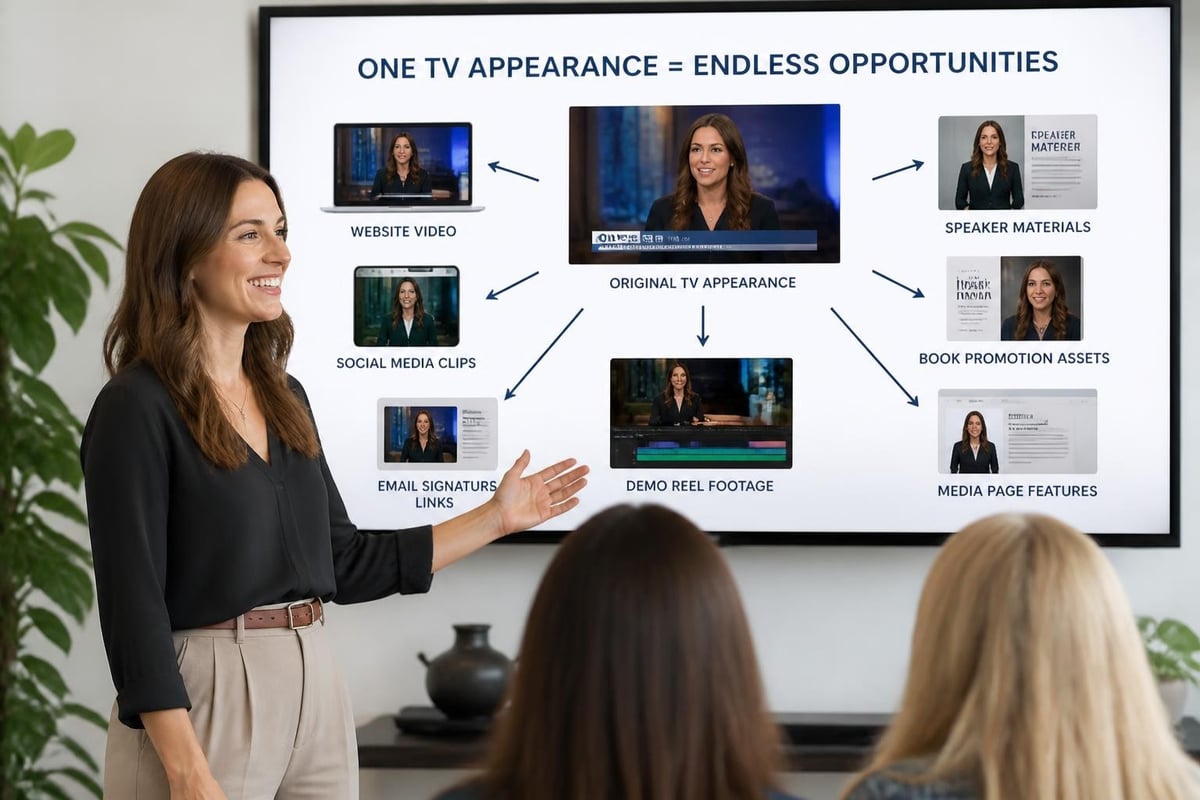
The segment itself represents only 10% of the total value. Strategic authors extract maximum benefit through systematic post-appearance activities. This is where most authors fail-they book TV, appear, then do nothing with the footage.
Repurposing Your Television Content
One three-minute segment can become dozens of marketing assets:
- Website hero video: Embed the segment prominently on your homepage
- Social media clips: Create 15, 30, and 60-second highlights
- Email signature: Link to your TV appearance
- Speaking materials: Include in speaker one-sheets and proposals
- Book promotion: Feature on book sales pages and Amazon Author Page
- Demo reel additions: Update your media reel with each new appearance
- LinkedIn About section: Mention TV credentials
- Media page: Create a dedicated press and media section on your website
Request broadcast-quality footage from the network. Most provide this for promotional use. High-resolution files enable professional editing and integration across platforms. The strategies outlined in comprehensive book promotion idea guides emphasize this multiplier effect-one appearance becomes ongoing credibility proof.
Building Media Momentum
First appearances create opportunities for additional bookings. Producers talk with each other. One network appearance often leads to invitations from competing networks. Strategic follow-up accelerates this momentum.
After each appearance, immediately:
- Thank the producer via personalized email within 24 hours
- Share social proof by tagging the network on your platforms
- Monitor audience response through website traffic and social engagement
- Document results including sales spikes, leads, or speaking requests
- Update pitch materials with the new credential
This systematic approach to publicity campaigns transforms isolated appearances into sustained media presence. Regular TV visibility compounds credibility exponentially.
Working with Booking Agencies and Publicists
Many authors wonder whether to pursue TV independently or hire professional help. Both approaches work, but they serve different scenarios. Understanding when to invest in professional support versus DIY efforts affects results dramatically.
The DIY Approach to Television Booking
Independent booking is possible and provides valuable learning experiences. Authors who understand how to promote my book on TV through direct outreach can book media interviews independently using systematic processes.
DIY advantages include:
- Cost savings: No agency fees or monthly retainers
- Direct relationships: You build personal connections with producers
- Learning curve: Understanding media deepens your expertise
- Flexibility: Pitch on your timeline without coordination delays
- Long-term skill: Knowledge transfers to future book launches
However, independent booking requires significant time investment. Researching shows, finding producer contacts, writing pitches, and following up demands consistent effort. Most authors underestimate this time commitment.
Professional Booking Services and Guaranteed Placements
Professional TV booking services dramatically accelerate results. Established agencies maintain relationships with producers across networks. They understand current booking needs and can position authors strategically.
The BookedForTV™ Guaranteed Placement System exemplifies professional approaches that eliminate uncertainty. Rather than hoping pitches succeed, guaranteed systems ensure confirmed appearances through proven producer relationships and strategic positioning frameworks.
When evaluating booking services, examine:
- Guarantee specifics: Confirmed placements versus “we’ll try”
- Network quality: Local versus national, broadcast versus cable
- Preparation support: On-camera training and message development
- Timeline clarity: How quickly placements happen
- Success metrics: Client results and testimonials
Resources like getting booked on TV fast outline systematic approaches that professional services employ. The three-part model-book, hook, and look-requires expertise to execute effectively.
Navigating Specific Television Opportunities
Different television opportunities require adapted strategies. Understanding these nuances helps authors prioritize efforts toward highest-value placements.
Morning Show Strategies
Morning shows represent ideal starting points for most authors. These programs need daily content, welcome author guests, and reach broad audiences. Successful morning show appearances focus on practical advice and engaging storytelling.
Producers prefer:
- Timely topics: Connect your book to current events or seasonal themes
- Visual elements: Demonstrations, props, or before/after examples
- Upbeat energy: Morning audiences want inspiration, not heavy content
- Multiple takeaways: Give viewers several actionable ideas
- Relatable stories: Personal anecdotes that illustrate key points
Morning segments typically run three to five minutes. Practice condensing your book’s main concepts into this timeframe. Focus on one big idea with supporting points rather than trying to cover everything.
News Commentary and Expert Panels
Cable news networks frequently need expert commentary on developing stories. These opportunities position authors as thought leaders rather than book promoters. However, the authority established translates directly into book sales and client inquiries.
Expert commentary success requires:
- Availability: Respond to producer requests within hours
- Concise opinions: Take clear positions supported by expertise
- Sound bite skill: Deliver memorable quotes in 10-15 seconds
- Political awareness: Understand the network’s perspective and audience
- Repeat value: Provide reliable, quotable content that earns callbacks
These appearances rarely mention your book directly. The on-screen credential (“Author of [Book Title]”) provides subtle promotion while your expertise does the selling.
Specialty Shows and Niche Networks
Targeting C-SPAN’s BookTV or other specialized programming connects authors with highly qualified audiences. While total viewership may be smaller than morning shows, audience relevance often surpasses broad programming.
Niche network advantages include:
- Engaged audiences actively interested in your topic
- Longer segment formats allowing deeper discussion
- Less competition for booking slots
- Archived content providing ongoing discovery
- Credibility within specific professional communities
Measuring Television Appearance ROI
Understanding how to promote my book on TV includes tracking actual results. Many authors appear on television without measuring impact, missing opportunities to optimize future appearances.
Quantitative Metrics Worth Tracking
Establish baseline metrics before your appearance, then monitor changes:
| Metric Category | Specific Measurements | Tracking Method |
|---|---|---|
| Book Sales | Amazon rank, daily units sold | Hourly monitoring on appearance day |
| Website Traffic | Visitors, page views, time on site | Google Analytics with campaign tags |
| Lead Generation | Email signups, consultation requests | Form submissions with source tracking |
| Social Engagement | Followers, shares, comments | Platform analytics snapshots |
| Speaking Opportunities | Event invitations, keynote requests | Email tracking and CRM notes |
| Media Requests | Interview invitations, podcast bookings | Media inquiry log |
Most authors see immediate Amazon ranking jumps during and after appearances. However, the more valuable metrics track qualified lead generation and premium client inquiries that emerge in the weeks following.
Qualitative Impact Assessment
Some television benefits resist quantification but matter tremendously. Assess qualitative factors including:
- Positioning shift: How prospects perceive your expertise differently
- Networking value: Connections made through viewers reaching out
- Confidence building: Comfort with media improving future performance
- Content creation: Material generated for other marketing uses
- Competitive advantage: Differentiation from competitors without TV presence
Authors often report that single TV appearances change how prospects respond. Instead of needing to convince people of their expertise, the TV credential creates instant credibility that shortens sales cycles dramatically.
Common Mistakes That Undermine Television Success
Learning how to promote my book on TV means avoiding preventable errors that sabotage otherwise talented authors. Recognizing these pitfalls helps you sidestep them entirely.
Over-promoting the book: Networks invite experts, not salespeople. Constant book mentions irritate producers and turn off viewers. Let your expertise sell the book indirectly.
Ignoring preparation: Assuming you can “wing it” because you know your topic destroys careers. Every professional athlete practices despite natural talent. Authors must do the same.
Poor message discipline: Trying to cover too much information confuses viewers. Focus on one core message with supporting points.
Neglecting follow-up: Failing to thank producers or leverage appearances wastes relationship capital and marketing opportunities.
Wrong network targeting: Pitching business content to lifestyle shows or vice versa wastes time and damages your reputation with producers.
Technical incompetence: Bad audio, poor lighting, or internet failures during remote segments ensure you’re never invited back.
Misunderstanding audience: Speaking to your peer group rather than the show’s actual viewers makes segments irrelevant.
The advantages of appearing on TV shows for book promotion multiply only when authors avoid these common errors.
Developing Long-Term Television Strategy
Single appearances provide temporary boosts. Sustained authority requires ongoing television presence. Strategic authors build systematic approaches to continuous media visibility.
Creating Your Annual Media Calendar
Plan television appearances around:
- Book launch timing: Intensive media push during release week
- Seasonal relevance: Topics connecting to holidays or annual events
- Industry conferences: Tie appearances to speaking engagements
- News cycles: Prepared responses to predictable trending topics
- Product launches: Coordinate TV with new offerings or services
This strategic approach transforms random opportunities into coordinated campaigns. For guidance on developing comprehensive promotional strategies, resources on public speaking for beginners provide foundational skills that transfer directly to television confidence.
Building Producer Relationships Over Time
Television success compounds through relationships. Producers remember reliable, professional guests who deliver value. Nurture these connections through:
- Regular check-ins offering new segment ideas
- Sharing relevant content they might find useful
- Providing referrals to other quality experts
- Responding quickly when they need last-minute guests
- Following their shows and acknowledging great episodes
These relationships eventually reach the point where producers contact you proactively. This transformation-from pitching desperately to being sought after-represents true television authority establishment.
Mastering how to promote my book on TV transforms authors from self-published hopefuls into recognized authorities who command premium fees and attract ideal clients. The strategies outlined here-from building producer-ready positioning to leveraging appearances for maximum impact-create sustainable competitive advantages in crowded markets. If you’re ready to accelerate your authority through guaranteed television placements and systematic media visibility, Mitch Carson specializes in helping CEOs, authors, and experts secure the TV appearances that establish unignorable expertise and market leadership.